Executive Director Sandy Sweitzer shares how Triangle Land Conservancy preserves open space, safeguards drinking water, supports local farms and ensures future generations can enjoy the natural beauty of the Triangle
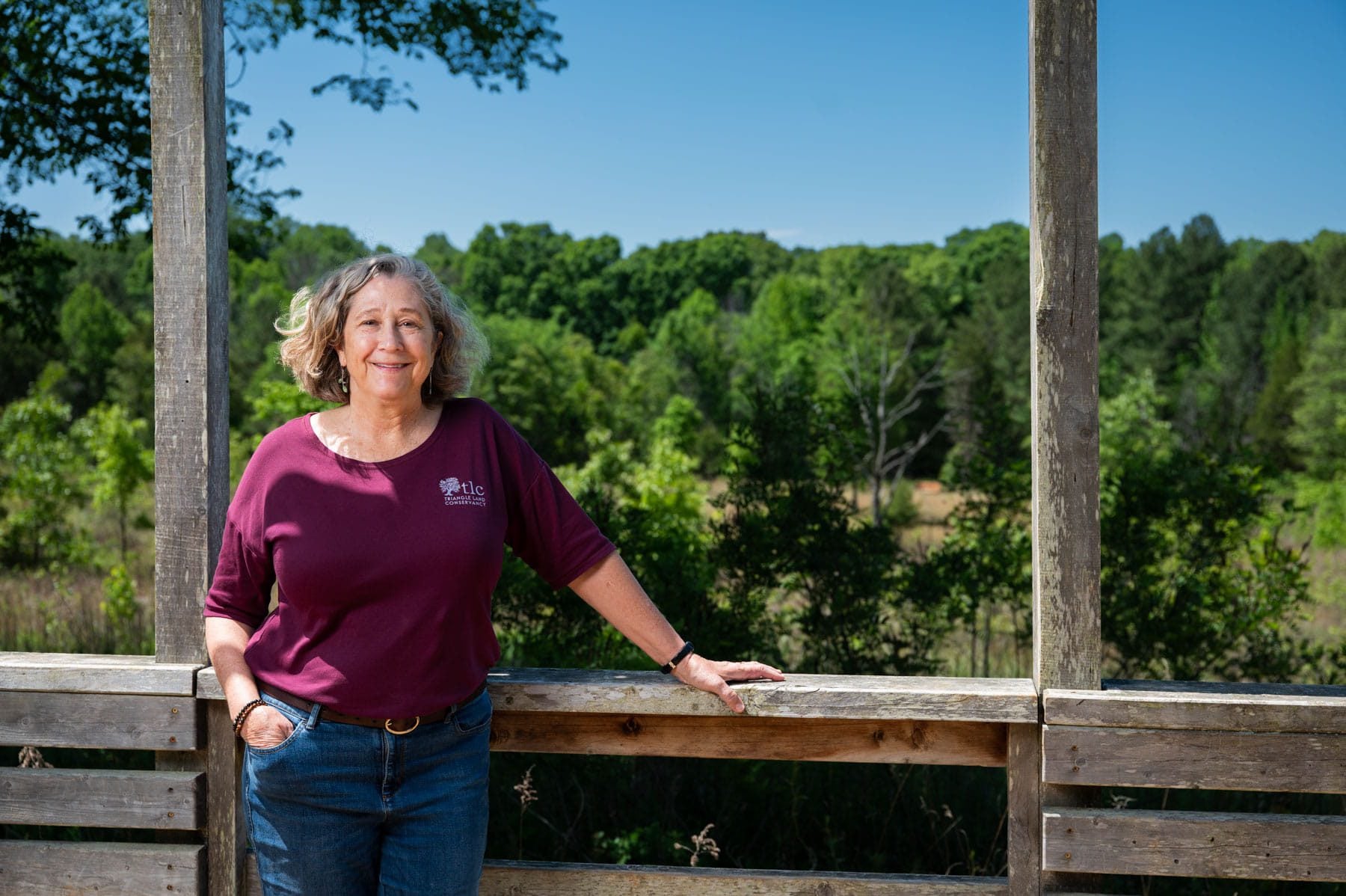
By Sandy Sweitzer | Photo by John Michael Simpson
When my family moved from California to Fayetteville, North Carolina, almost 30 years ago, we dreamed of living in the Triangle. I was hired to start the Durham Library Foundation, establishing endowments to support the library for generations. Although my husband worked in Raleigh, I insisted we live in Durham to enjoy the rich history, diversity and access to nature. Since then, I’ve grown and changed alongside the city – although it’s now much hipper than I am.
I left DLF to focus on conserving natural resources with The Nature Conservancy, which operates its statewide efforts out of Durham. After five years traveling the state with TNC, I wanted to make a difference closer to home. Following brief stints at both Durham and Orange County Habitat for Humanity affiliates, I was recruited to Triangle Land Conservancy in 2013 and became executive director in 2015.
I’m inspired every day by TLC’s mission: working with partners to protect land for – not from – people. We provide the benefits of conservation to everyone: clean water and climate-resilient landscapes, farmland that provides food and jobs, and access to outdoor space for recreation and respite.
Conservation benefits you even if you never step foot on one of TLC’s eight free public nature preserves. TLC works with local governments to protect land upstream to naturally filter Durham’s drinking water supply. We also collaborate with Durham County to keep farmland available for community farmers like those at Catawba Trail Farm and Earthseed Land Collective. If you enjoy time in nature, TLC provides hundreds of acres to explore throughout the Triangle. Our largest preserve, Horton Grove Nature Preserve, is just north of downtown and features trails that share stories of descendants of enslaved people who labored at the nearby Stagville plantation, now a state historic site.
Durham’s past and future are inextricably tied to land – who owns it, who doesn’t and how it is used. For thousands of years, Indigenous people stewarded this land. Later, plantation owners built wealth using enslaved people’s labor. Next, textiles and tobacco shaped how our county grew and who reaped the benefits. And as our area becomes an increasingly attractive place to newcomers and developers, we must make choices that enable everyone to flourish.
Open spaces across the Triangle face unprecedented pressure from rapid growth, rising land prices and a changing climate. Just as we need land for homes and businesses, we must also protect wild and working lands for the health and well-being of Triangle residents.
That’s why, in 2023, TLC launched our largest-ever fundraising campaign – “Force for Nature: A Campaign to Protect the Triangle’s Land & Water for All” – to raise $60 million by June 30, 2026, in order to accelerate the conservation and care of land, water and community across our growing region. Thanks to generous financial gifts and land donations, TLC has less than $300,000 left to raise. Campaign funds have been put to work immediately, enabling our organization to conserve an additional 6,000 acres of land in perpetuity, open an eighth nature preserve at Old Creedmoor in Raleigh and strengthen our education programming.
But we cannot stop. Today we have another 4,000 acres of land in the pipeline to be protected. We need the sustained support of our community to maintain this momentum. If you’d like to join this historic moment, you can make a donation at triangleland.org.
Durham still has the same spirit of opportunity and perseverance that attracted me decades ago. As our community continues to grow, our choices will shape the city that future generations inherit. I invite you to invest in that future by supporting TLC’s work. Together, we can create a safer, greener, more resilient Durham for generations to come.