Mangum Street Grocery blends innovative architecture, smart acoustics and playful design in a custom, compact space built for making music
By Sharon Kinsella | Photography by John Michael Simpson
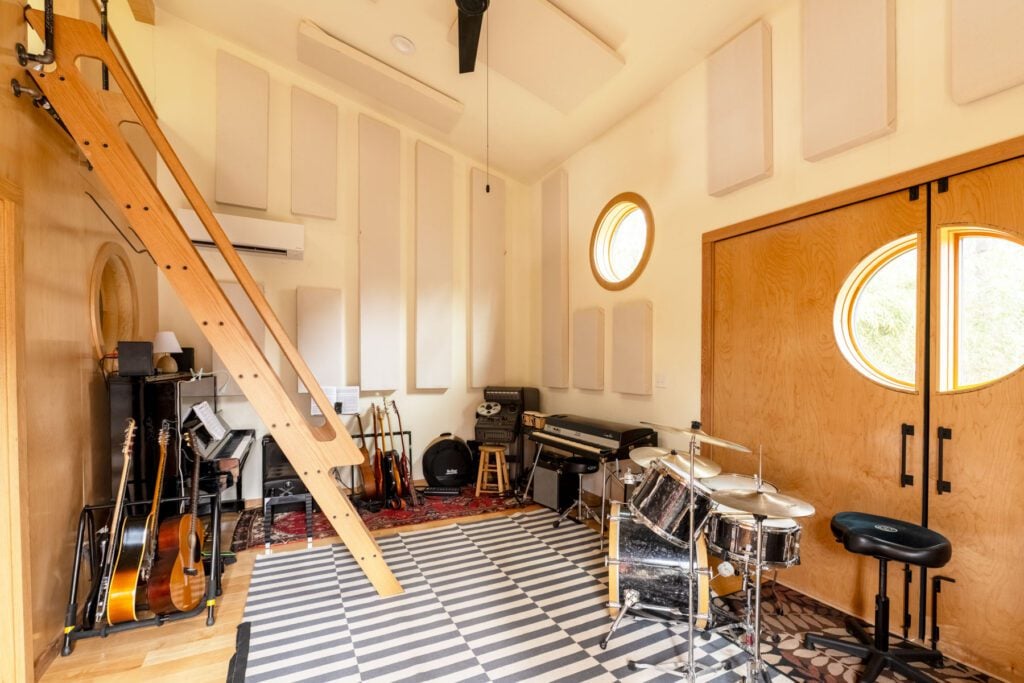
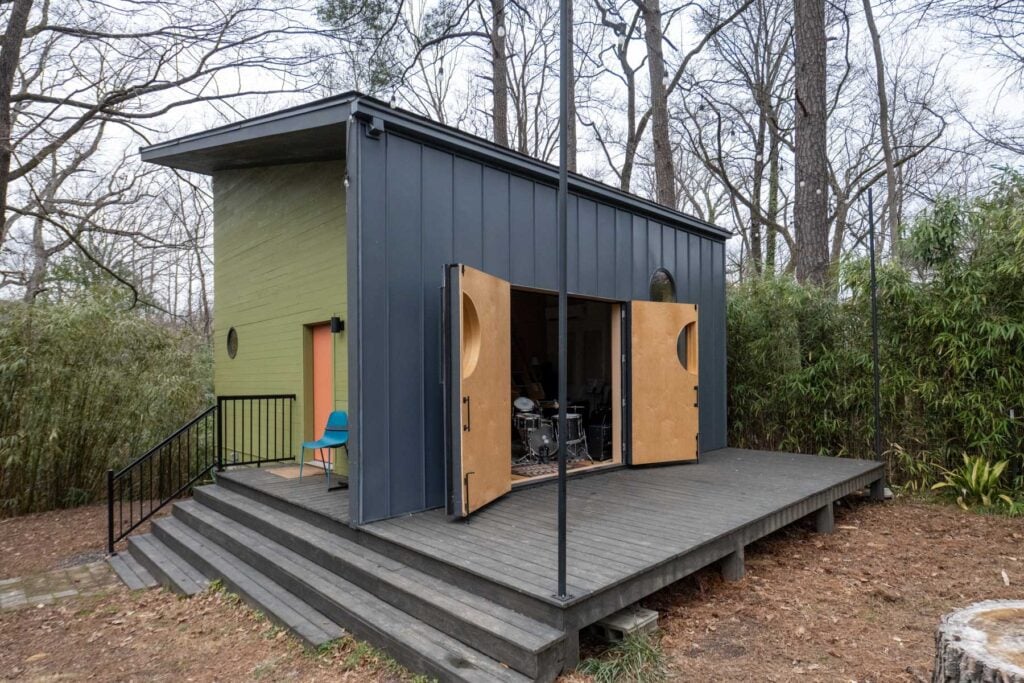
Walk down a gently sloping path leading behind a cheery peach Craftsman house in Old North Durham, and you’ll encounter a surprising structure. Round-eyed, metal-skinned and painted a shadowy charcoal with a burst of bright green on its side – it’s more creature than outbuilding. Inside, instruments and acoustic panels line the walls. A collapsible ship’s ladder leads to a loft. On most mornings, someone is making music.
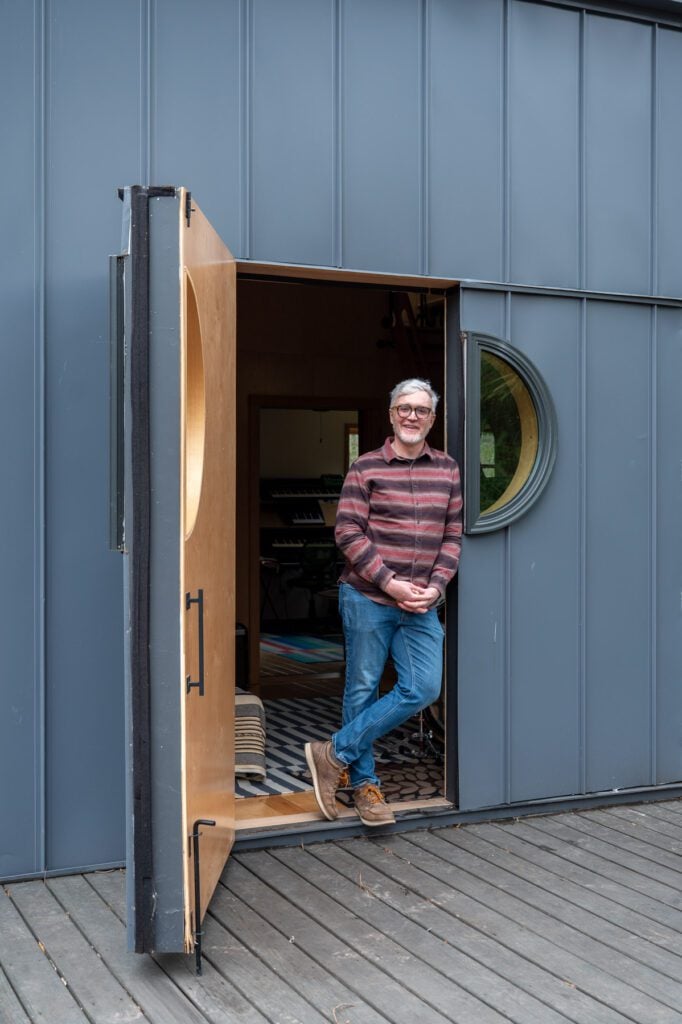
That someone is James Phillips, musician, recording engineer and the force behind Mangum Street Grocery, an independent recording studio he built in 2021 just steps from his back door. James is a longtime member of the indie folk-pop band Bombadil alongside Daniel Michalak, who now lives in France, and newest member Madison Via Rivis. But his studio has grown far beyond his own projects. He’s recorded albums, film scores, choirs, podcasts and full-band sessions in a space designed to make creating art “fun, comfortable and quick” for both himself and others. “I really love helping other folks realize their creative ideas,” James says. “It’s deeply rewarding to me.”
The building came to life through a collaboration with architect Bronwyn Charlton, principal of Charlton Architecture PLLC. She met James and his wife, Torry Bend, a puppeteer and Duke University theater studies professor, socially around 2019. “We connected in our love of and practice of art,” Bronwyn says. The three shaped the design together before moving into financing and construction, with James and Torry completing much of the build themselves alongside carpenter Fernando Rubio between January and December 2021.
“The studio needed to feel like it belonged in the backyard both in terms of its size and form, but also its character,” Bronwyn says. “I didn’t want it to look like it was plopped down from outer space, but rather like a playful creature in the garden.” Working within a $150,000 budget and a 497-square-foot footprint, she chose carefully where to invest and where to economize. The standing-seam metal roof – the project’s biggest design gesture – wraps down the front face of the building in one continuous surface, giving the studio its sculptural silhouette. The other facades feature more cost-conscious horizontal siding. Circular windows punctuate each elevation. “The way I see it is that each side of the building has its own literal face – a mouth and eyes,” Bronwyn says.
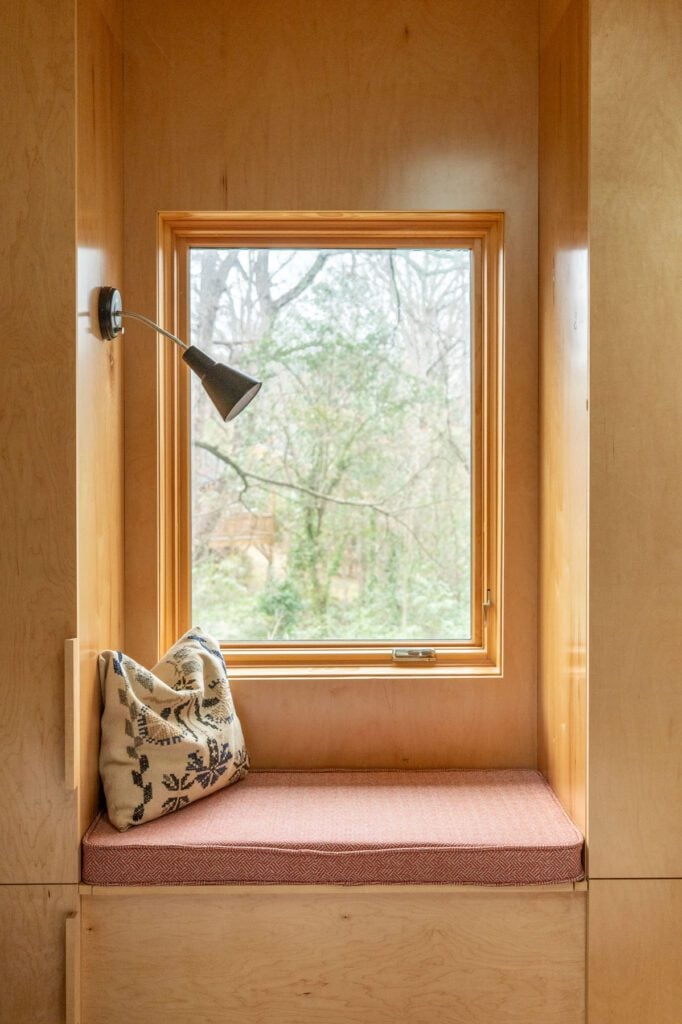
The result is simple yet striking: modern, natural and warm, with clean lines softened by a touch of whimsy and integration into the landscape. Interiors follow suit: light maple cabinetry and floors, white walls, natural trim and pops of color. Torry guided the palette, infusing a Scandinavian-inflected sensibility – calm, bright and lighthearted – throughout. “I am always considering biophilia in my work,” Bronwyn adds. “Natural light and views are part of my canvas, and the windows and [two] skylights on this project are carefully coordinated to offer that connection to the outdoors.”
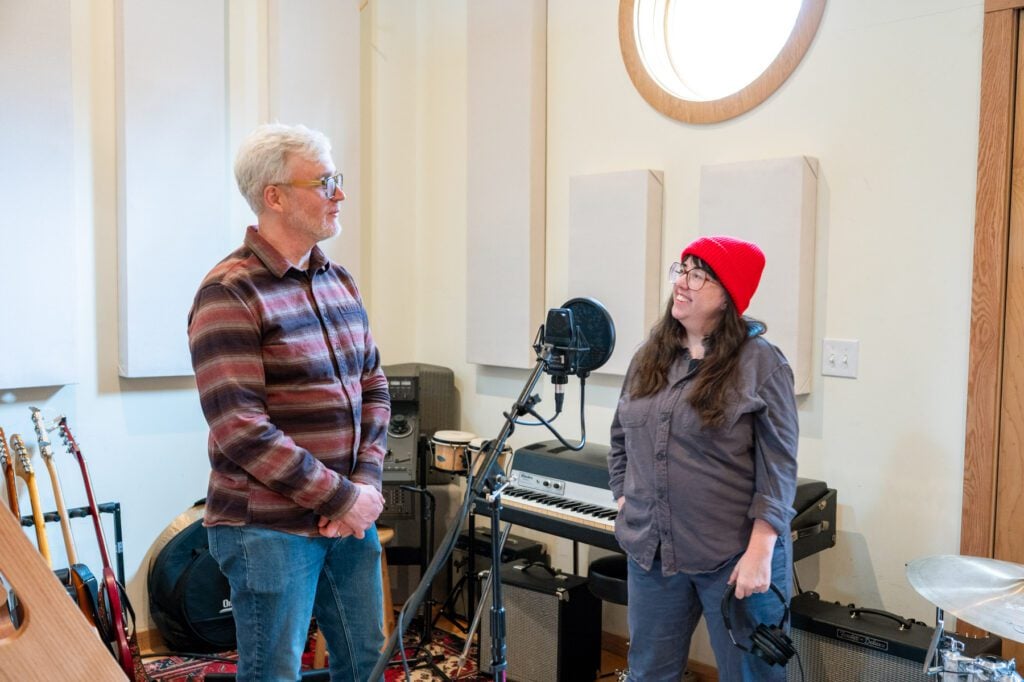
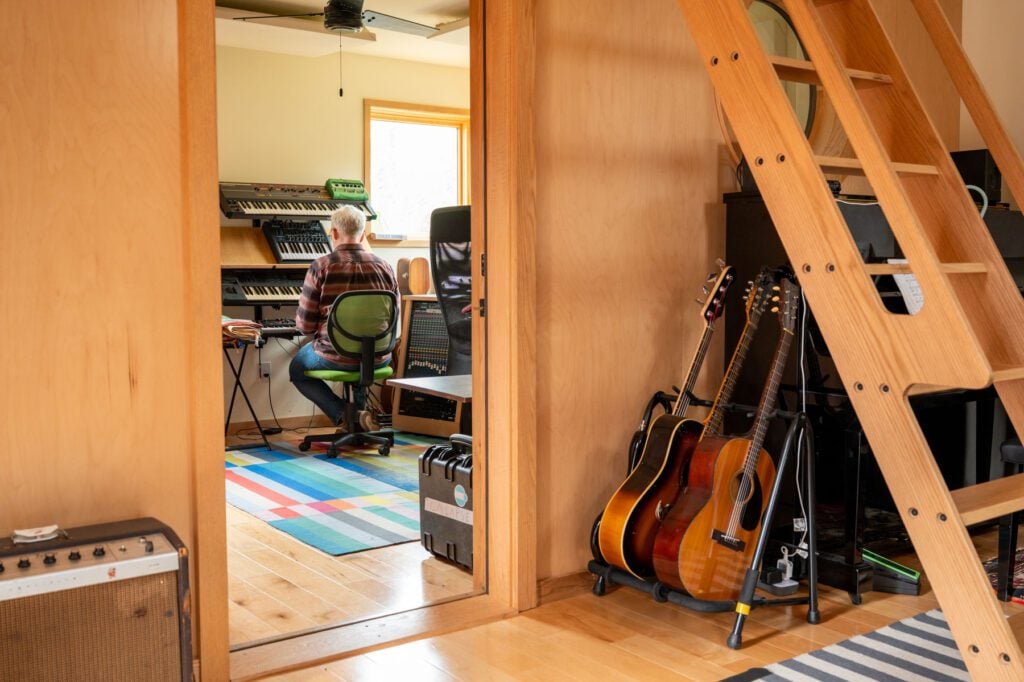
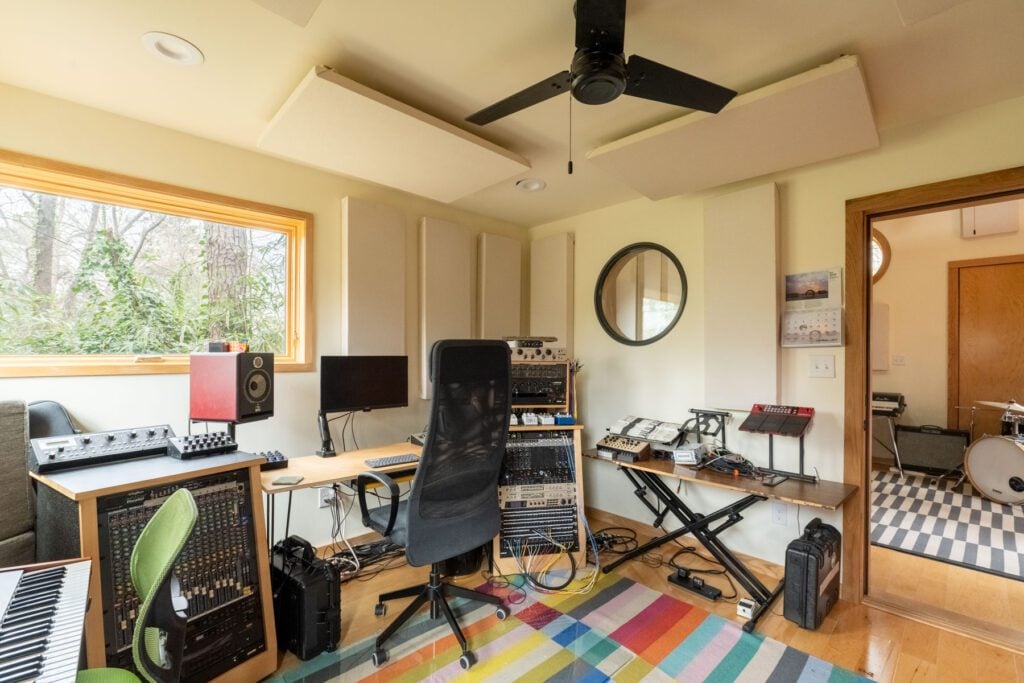
Inside, the 740-square-foot studio packs in a remarkable number of details. A control room anchors the back, with custom built-ins and a corner window overlooking the wooded gully beyond the lot, where James enjoys observing “hawk action.” A circular window to the right of his desk aligns with one in the live room door, creating a framed sight line through the building. On mornings when James plays his upright piano, the sunlight and trees reflect through the circles, creating a layered, infinite effect.
The live room is the heart of the building: tall enough for optimal acoustics and wide enough for a full band, including a drum kit. Massive barn doors – on special hinges that allow them to fold fully flat – open the room entirely onto a performance deck. Closed, it’s an intimate recording space; open, it transforms into an outdoor stage that flows into the yard.
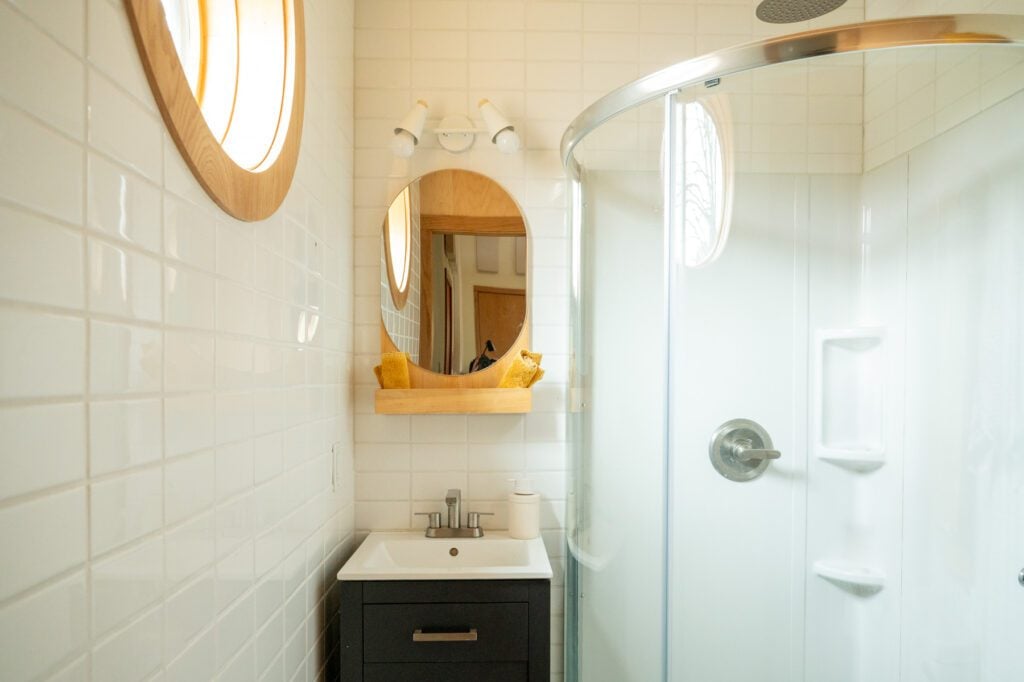
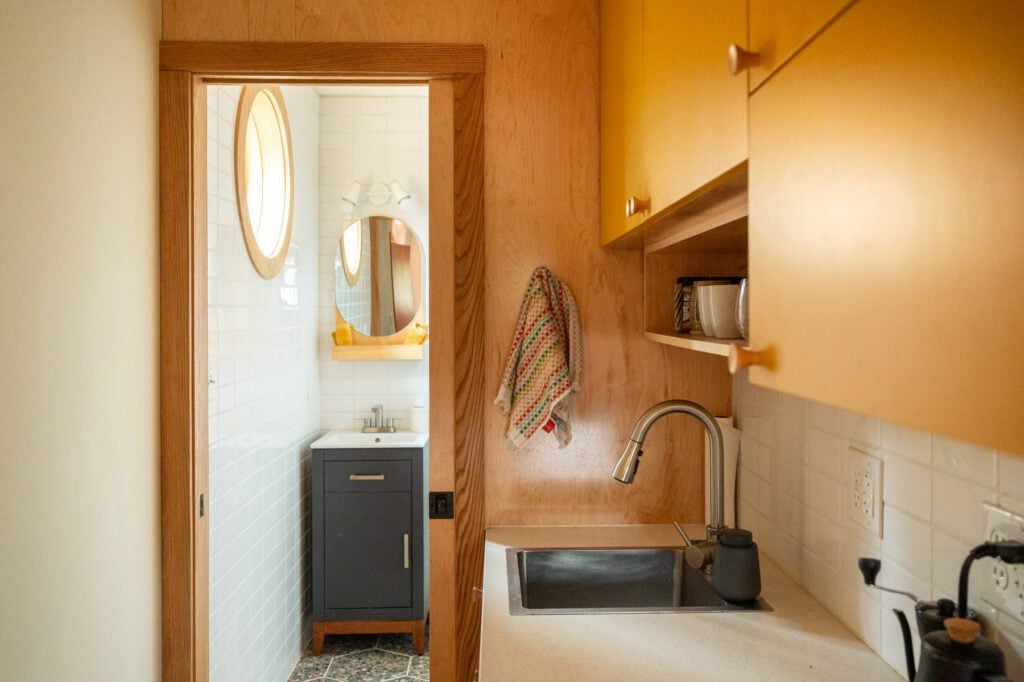
The natural slope of the lot resembles gentle stadium seating beyond the deck. A loft with a writing desk, window seat and floor-to-ceiling built-ins rounds out the space, along with a galley kitchenette and a bathroom – including a shower – where the hard tile surfaces have become “a secret sonic weapon,” James says. The amenities were intentional: James also wanted the building to host musical guests overnight if needed and, someday, function as a rental accessory dwelling unit.
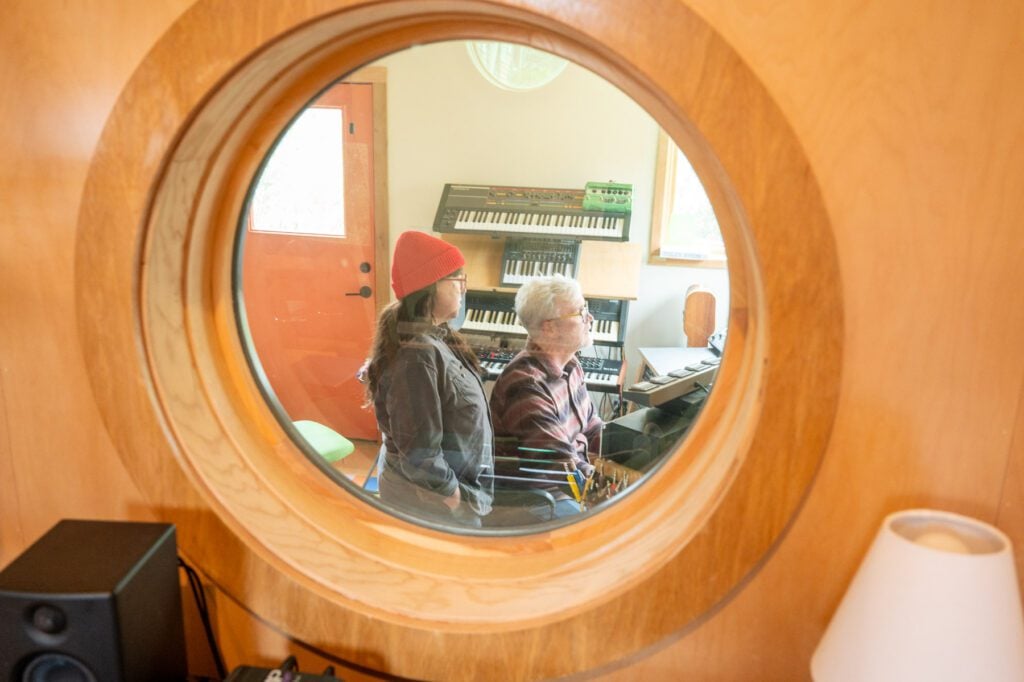
Acoustics naturally guided many of the design decisions. “You do what you can with the building,” Bronwyn says, “and then you finesse the rest.” She studied the proportions needed for quality sound – the relationship among length, width and height – while balancing a key constraint: the studio sits just beyond the couple’s deck and their kitchen and bedroom windows, so it couldn’t tower over the backyard. A mono-pitch roof provides height for both the loft and recording space without overwhelming the lot.
The final fine-tuning came via custom sound panels – wood-framed, insulation-filled and upholstered in white – designed by Torry and built largely by James. “The space sounded awesome for acoustic guitar without them up,” James says. “But if you tried to play drums and piano at the same time, you couldn’t hear each other. Now you can hear each [instrument] perfectly.”
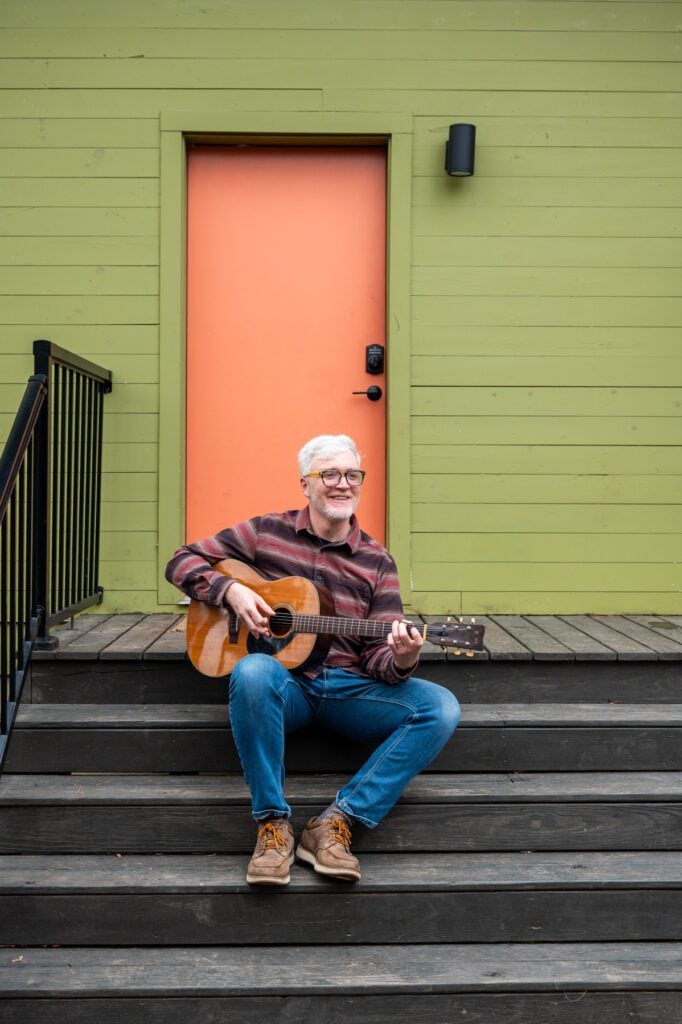
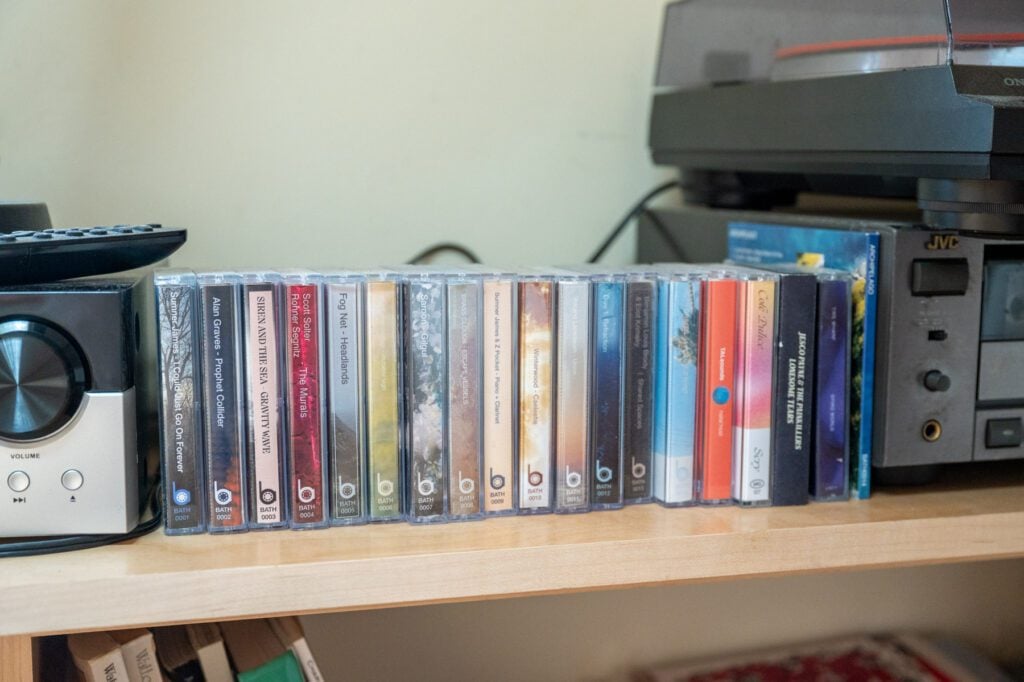
James taught himself to record around 2010 to avoid commercial studio fees, working for years out of his attic. For him and many of the artists he collaborates with, recording isn’t simply the final step in documenting a finished song – it’s part of the writing process itself. High-end studios can make that process costly – hourly rates add up quickly for musicians keeping an eye on the bottom line – and eventually, the traffic of musicians made it clear the work needed its own space. Torry, raised by a homebuilder, saw the solution. “I credit her with the idea and the encouragement to make it all happen,” James says.
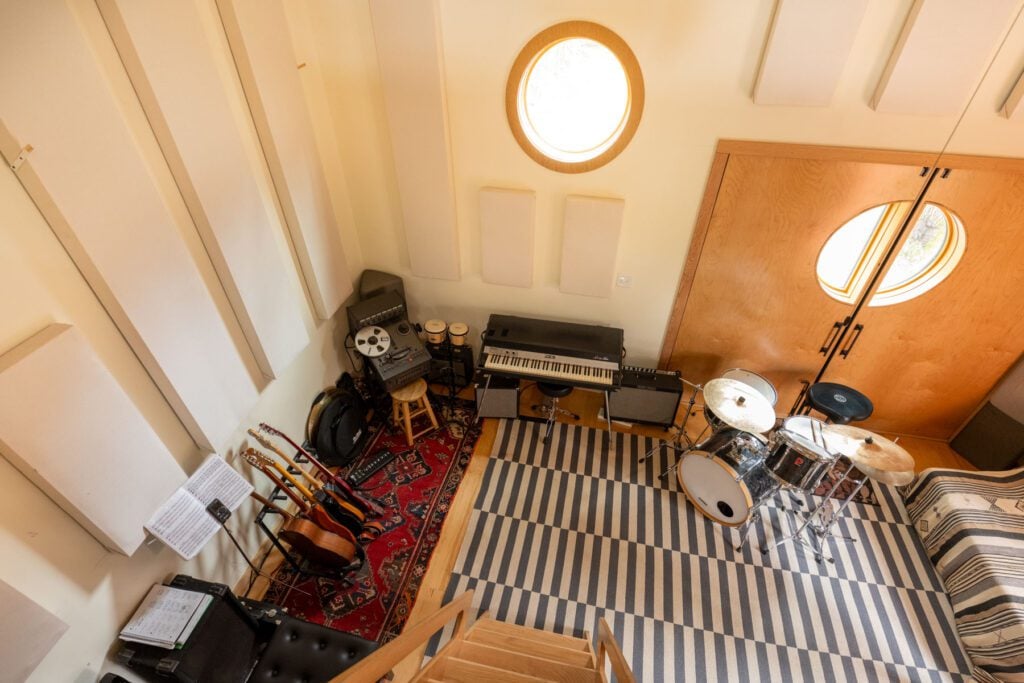
Since it opened, Mangum Street Grocery has led to the creation of two Bombadil records, solo albums, three film scores, and projects for artists including The Pinkerton Raid, Christy Jean Smith, The King Teen and Vito DiBona, among others. Bands often rent the space for their own sessions. On a 100-degree August night that also happened to coincide with James’ 40th birthday, the performance deck hosted a backyard concert, followed the next morning by an improvisational session that became the album “Dive 1: Refraction.” The studio has also hosted a silent film screening with live scoring, assorted concerts and even a pillow fight for James and Torry’s son, Linus Phillips, on his 6th birthday this past year.
“I walk out here every day, and I’m so grateful,” James says. His commute now consists of a few steps outside. “I play way more music now than I did when I thought I’d just tour all the time,” he says. The separation between home and studio is also a boon. “It’s been absolutely great for my mental health,” James adds. “Packing a lunch and heading out back for the day shows the world I mean business.