Paranormal research unit The Ghost Guild partners with the Carolina Theatre to explore its storied past – and perhaps a few lingering spirits
By Sharon Kinsella | Photography by John Michael Simpson
It’s a typical night at the Carolina Theatre: Performers take their final bows to thunderous applause, the house lights rise, and the crowd buzzes with praise as it spills into the lobby. Staff begin closing up as the post-show din fades to quiet, sweeping stray popcorn, cutting the lights and checking for stragglers before locking the doors. That’s when a vinyl piano melody drifts down the hall, seeming to float from above. Its source is an antique wind-up Victrola record player outside the third-floor donor lounge. It runs on a mechanical hand crank, not electricity – and no one has touched it all night. It seems to have turned on by itself.
This eerie occurrence is one of several unexplained phenomena that paranormal research nonprofit The Ghost Guild has partnered with the historic theater to investigate in honor of the venue’s centennial anniversary. The organization will spend the next two years gathering data, testing hypotheses and presenting its findings, leaving the public to decide whether the Carolina Theatre is truly a hotbed of haunted activity.
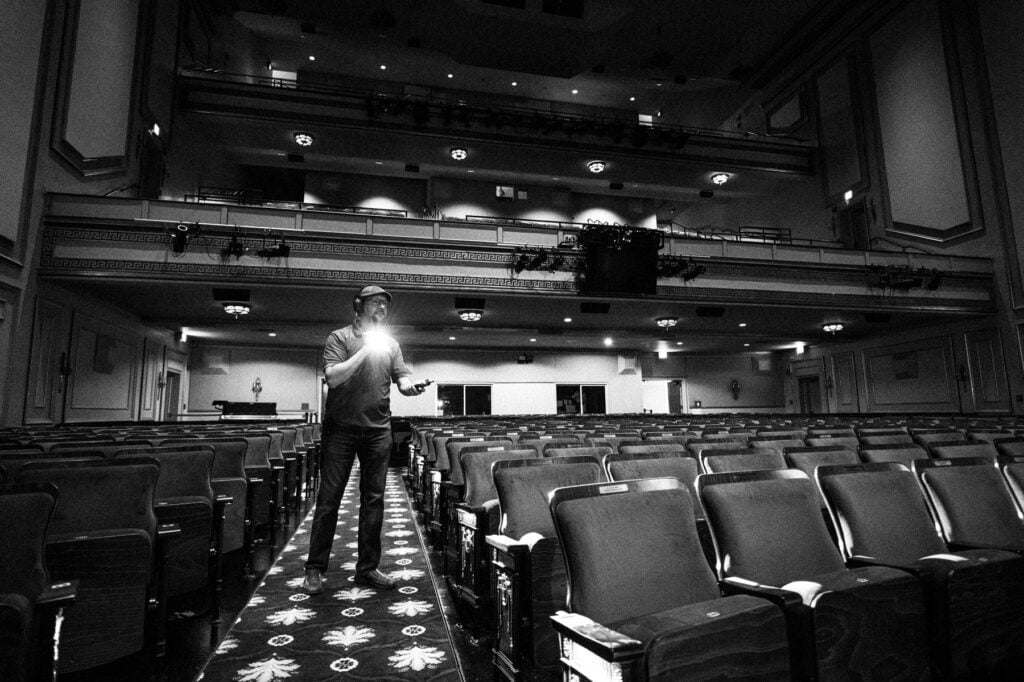
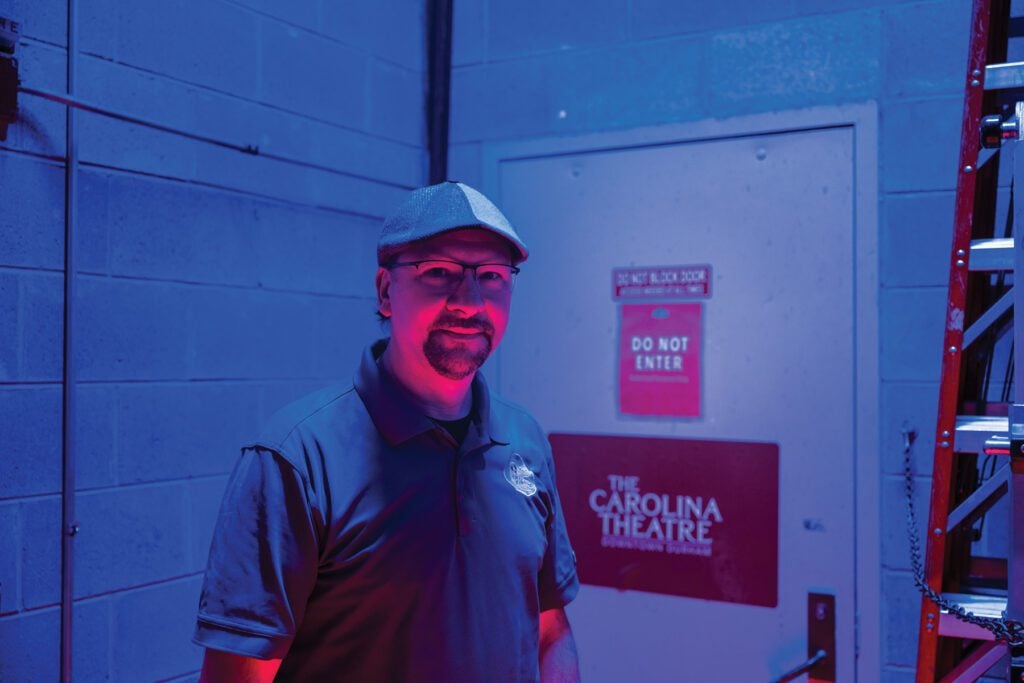
“We love theaters,” says Ghost Guild co-founder and Executive Director Nelson Nauss. “[They] just seem to always have ghost stories, so we like to go into those places and see if we can experience those [occurrences] ourselves, or see if we can explain them as well.”
Nelson and his team, all volunteers, began the investigation in April by surveying Carolina Theatre staff and guests about chilling or unusual experiences at the venue. Since respondents have no knowledge of what others have reported, the team zeros in on stories that repeat most often, treating those overlaps as the strongest leads worth investigating.
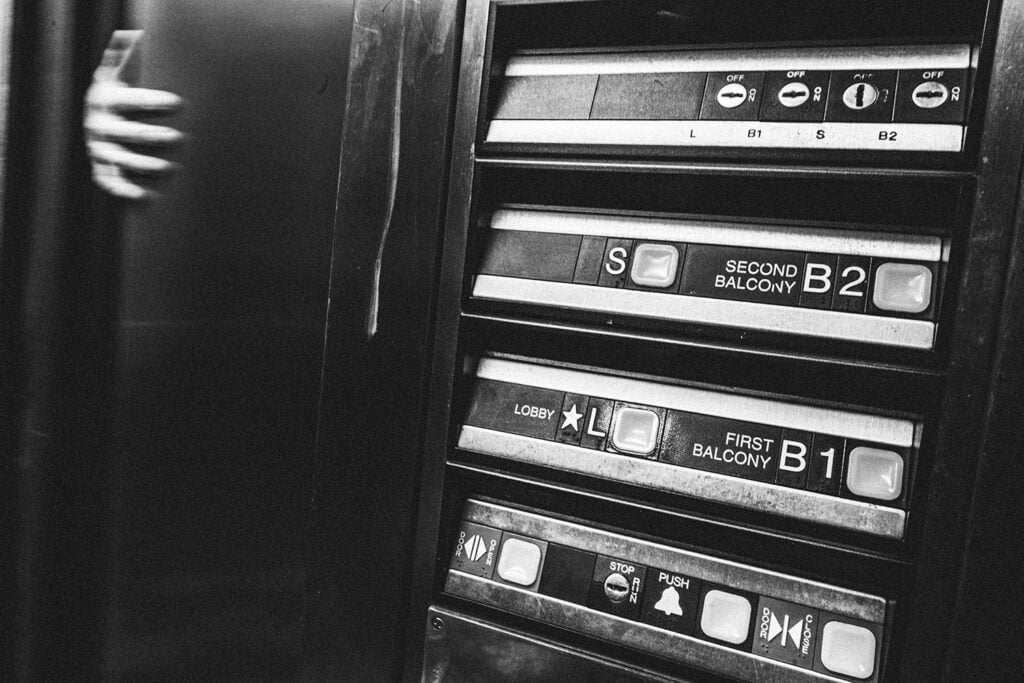
In addition to the spooky Victrola, the lore they’ve collected includes footsteps and voices in a narrow hallway outside a staff member’s basement office, a typewriter clacking behind a door on the lower balcony level – in a corridor behind the old Connie Moses Ballroom concession stand, now used as an IT closet – and sightings of a little boy in the second balcony of Fletcher Hall, dressed in what looks like a vintage usher’s uniform. The stage itself has produced its share of creepy feelings and mysterious activity, too.
The team approaches each claim by forming real-life hypotheses for what could have caused the sound, sight or feeling – faulty electrical wiring might account for flickering lights while traffic or ambient noise from neighboring buildings could explain that bump in the night – then test those possibilities through experiments and attempts to reproduce each phenomena or identify its source. If they discover an explanation, they move on to the next happening. If not, they go back to the drawing board, iterating through new rationales until what remains is truly unexplainable. “We very rarely give up,” Nelson says. “We’re constantly trying to explain it.”
Nelson, who by day works in data and analytics at UNC Health, describes himself as a skeptic – a label that can initially surprise those who hear about his investigations.
“I know it shocks people,” he says. “I’m science-based. I believe in data. I’ve had too many experiences that I still can’t explain, and I want to explain them, but it’s very hard for me to say something’s paranormal.”
That distinction is why he prefers the word “data” over “evidence”: Whatever survives his team’s testing hasn’t been proven paranormal, he says; it simply remains unexplained – at least for now.
“We’re not using [the data] to present a case that [something] is paranormal,” Nelson says. “This is the data we’ve collected, and we don’t necessarily know what it is yet.”
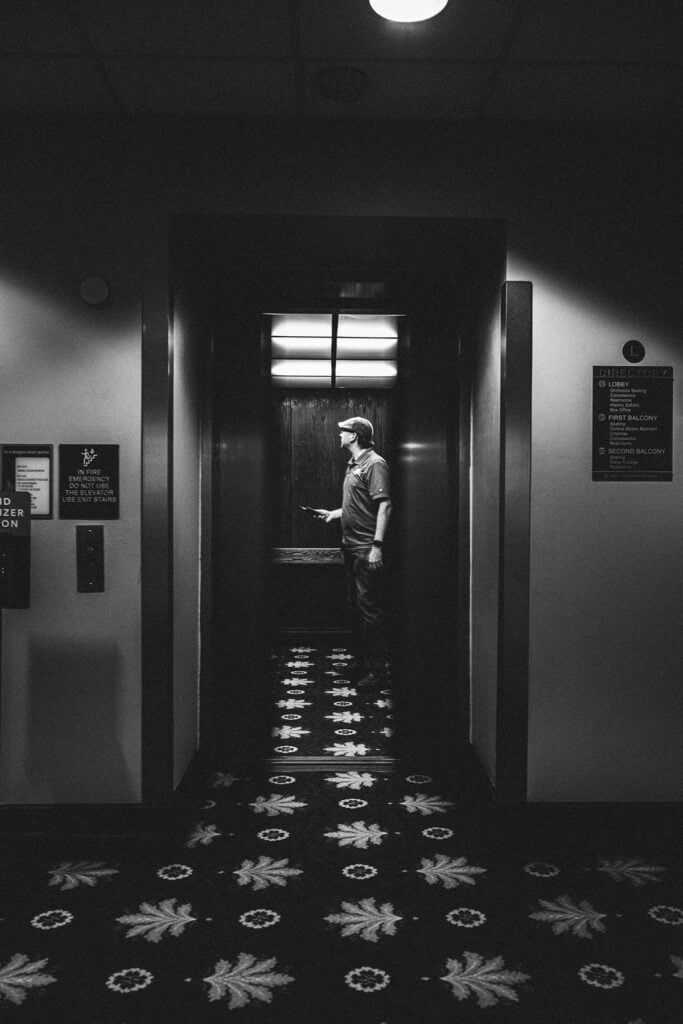
The team relies on a lineup of precise instruments that log sound, light, movement and shifts in atmospheric conditions – temperature, humidity and pressure – to gather that data. Nelson’s go-to is an environmental reader that tracks several of those markers at once and can also pick up surface vibrations.
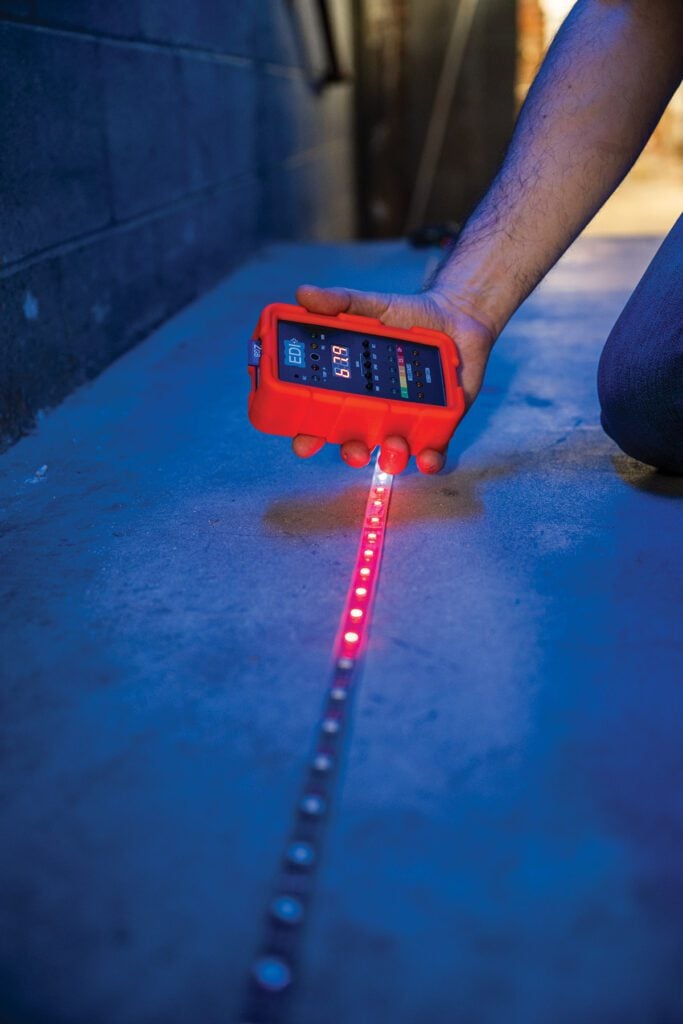
Then there are the secondary, less scientific tools, some made famous by ghost-hunting TV shows, which the team keeps on hand mostly to observe firsthand how they operate – and fail: cat toy balls that light up when touched, laser grids that reveal passing shadows, lidar sensor strips that illuminate when crossed, and spirit boxes, which rapidly scan radio frequencies to produce a stream of white noise through which spirits are said to communicate – a gadget Nelson notes is highly prone to audio pareidolia, where the brain interprets random noise as recognizable speech.
During a recent electronic voice phenomenon session, investigators addressed spirits aloud in hopes of capturing a response on a recorder. Ghost Guild Project Manager Jana Demetral and another team member left cat balls on the stage before settling into the second balcony with a radiating electromagnetism pod, a device that lights up when something disturbs the small electromagnetic field it generates. As the team asked questions directed at the little boy reported to appear there, the REM pod and the light-up balls onstage went off at the same time.
“[We] hadn’t experienced that before [in that space], so that was interesting,” Jana says, adding that multiple sensors activating simultaneously can make for the most compelling findings. The Ghost Guild will present its findings so far Oct. 17 at American Tobacco Campus’ Fullsteam Theater as part of the Museum of Durham History’s exhibit, “Playhouses and Picture Palaces: The Historical Theaters of Downtown Durham,” which opens Oct. 16. “Aloreing Destinations: Tickets Please” will take audience members on a virtual tour of North Carolina’s most historic – and allegedly haunted – performance venues, anchored by the guild’s research and investigations.
Whether the Carolina Theatre is actually haunted remains an open question. But The Ghost Guild’s work has a tangible impact beyond the paranormal. Nelson says sharing the group’s discoveries can draw people deeper into local history and encourage greater investment in the institutions they investigate, helping to preserve historical sites for future generations. That interest can translate into real dollars, too: Two tickets to accompany the guild on a nighttime investigation of the Carolina Theatre were recently auctioned off for $5,000 apiece.
History really comes alive when you start mixing it with lore and mystery, Nelson says. “And then [folks are] like, ‘Oh, wait, this is fascinating.’”
Share your own unusual experiences at the Carolina Theatre with The Ghost Guild.