A growing network of creative spaces, industry professionals and community organizations help artists find their footing, from the studio to the stage
By Brian Howe | Photography by John Michael Simpson
The Bull City’s musical landscape is a magnet for touring artists – thanks in large part to its celebrated venues, from the Durham Performing Arts Center to the Carolina Theatre – and an incubator for those here at home. But seeing so much opportunity doesn’t always make it easy to grasp.
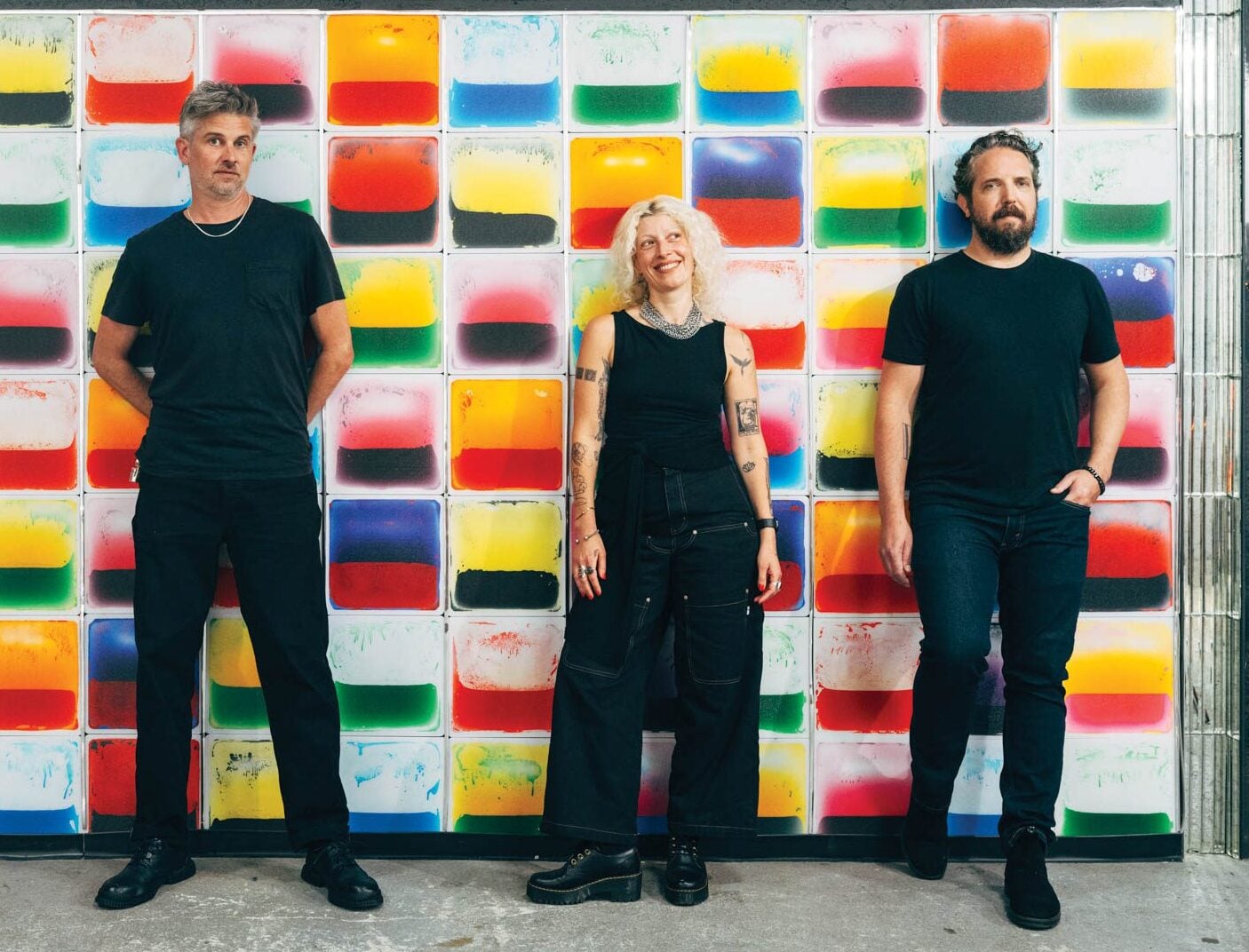
“The music industry is really difficult to break into today,” says Rachelle Sickerott. “You can access any sort of music you want, but to wade through it all … it’s hard. We’re lucky to have so many talented people in Durham, so it felt important to me to be a part of providing access.”
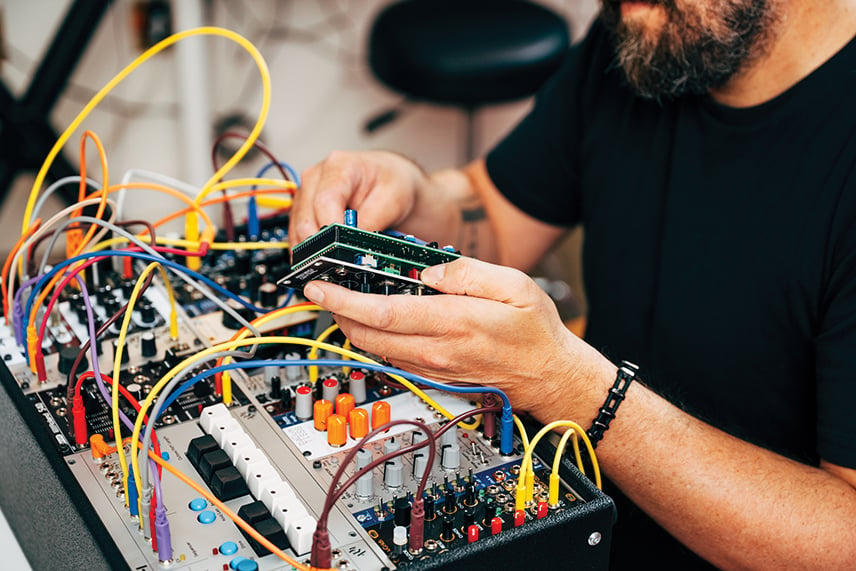
Rachelle, Nick Williams and Sean Thegen run BOOM Club, a community-focused “synthesizer clubhouse” where anyone can lay hands on oodles of tasty gear. BOOM stands for “Building Our Own Music” and first opened as a pop-up inside the American Tobacco Campus Rail Car in May 2025, following Nick’s realization of just how many synths he and his friend Alex Maiolo had amassed.
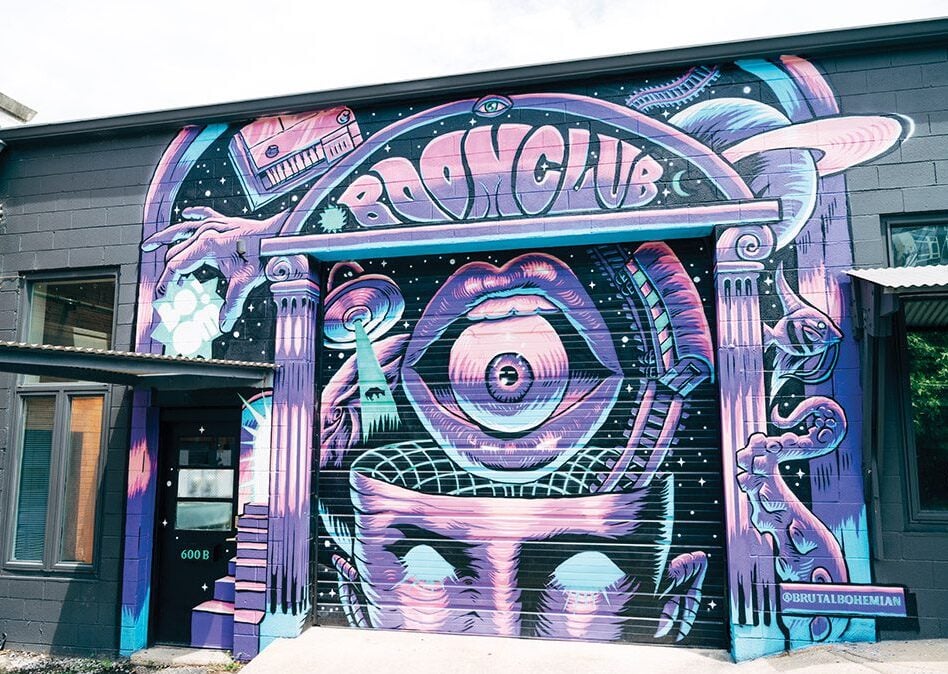
“I wanted to have a space where they could be used by younger artists and curious people who otherwise would not have access to them,” Nick says. “The learning curve can be high, especially if you don’t have somebody to show you how.”
BOOM Club found a new, much larger home in the former PS37 space on Foster Street in March. Its dozens of synths date from 1970 to today, and some can even be checked out like library books. For experienced musicians, it’s a place to add rare flavors to their blend; for newcomers, a place to start with guidance and community. So far, the founders have seen an encouraging response from members with a wide range of tastes and experience levels, from teens to seniors.
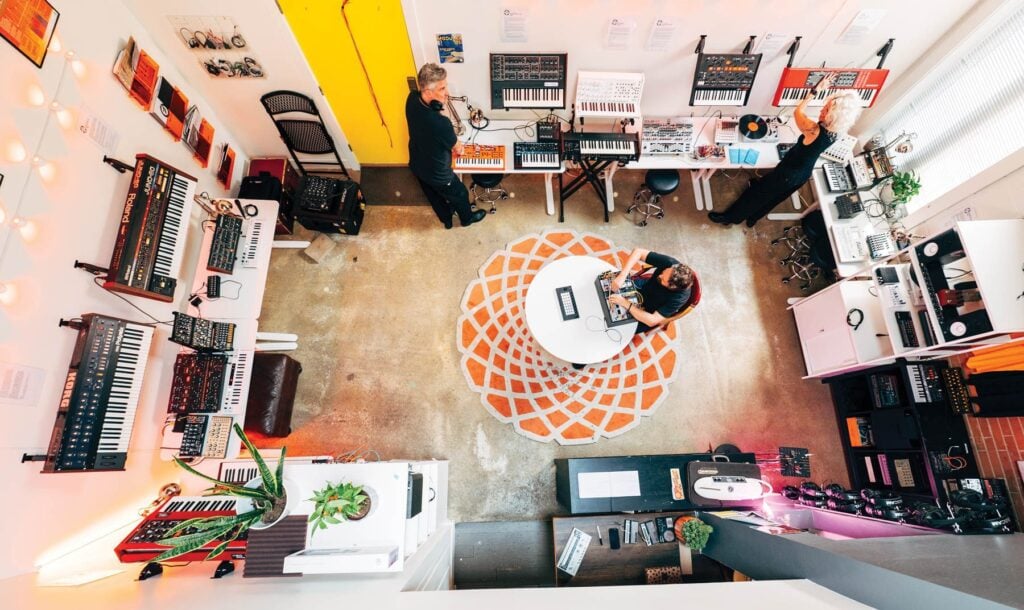
“I don’t think any of us were really sure who was going to utilize this,” Rachelle says. “The greatest thing to witness has been that this is for everybody. This is not exclusive.”
The club naturally brews a lot of electronic dance music, but that’s not all. Synthesizers are widespread, and artists in many genres might hone their craft at BOOM Club – then capture it at Tunes Recording Studio. Hidden below the Domino’s Pizza on North Roxboro Street since 2021, it’s snug, modern and full of personality.
“There’s no windows, but I’ve decked it out with a ton of really cool lights,” says Mack Geary, the chief engineer and sole proprietor. “I wanted to bring a ‘Miami Vice’-slash-LA vibe to Durham and make it futuristic.”
Born and raised in Durham, Mack spent two decades making and selling his own beats and apprenticing at studios. “I knew one day I wanted to open up my own studio back here in Durham because the demographics pertain to the majority of my skill set, which is hip-hop, pop and R&B,” he says.
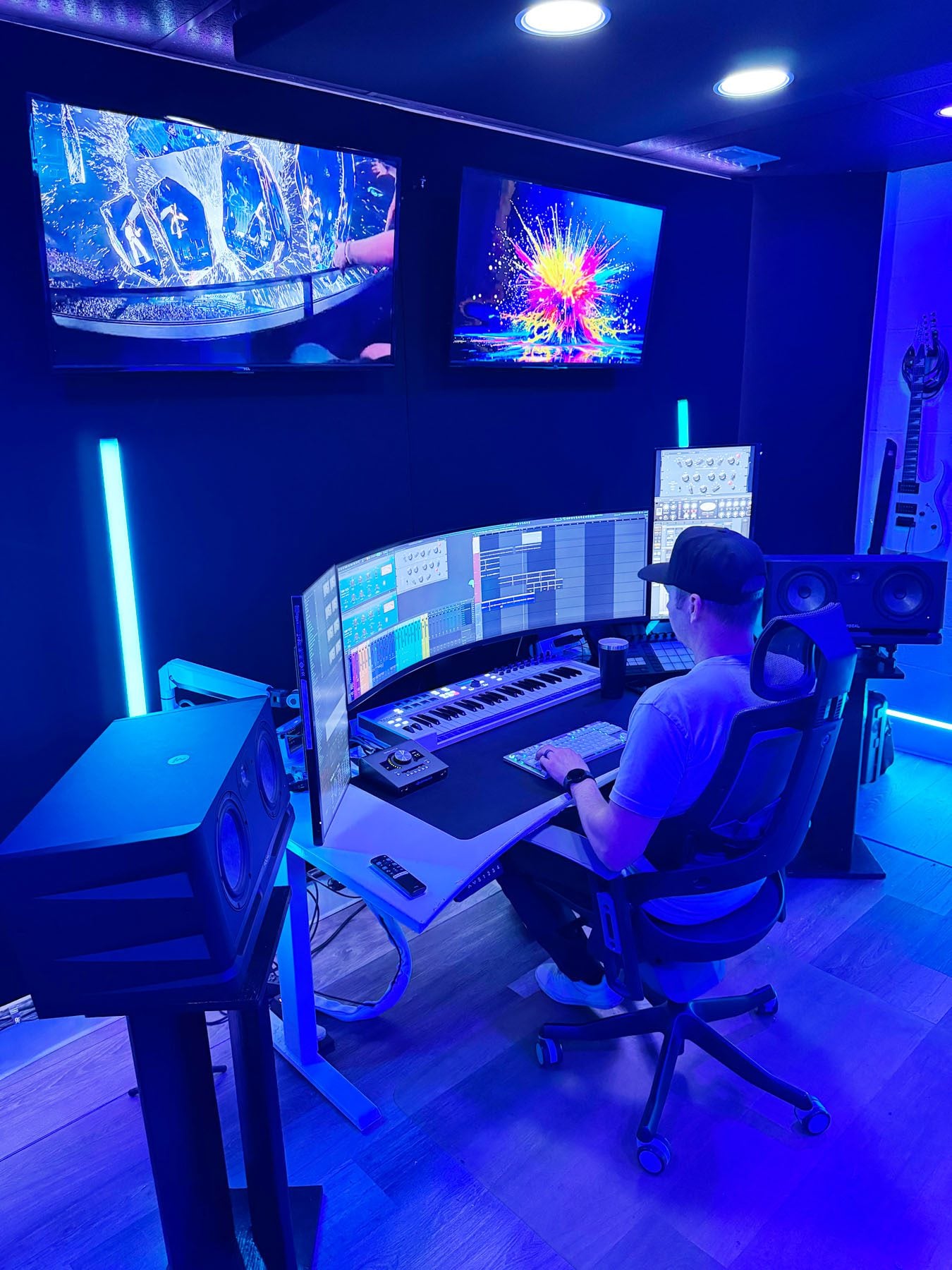
Tunes was founded in the digital-first era of streamlined, rapid content creation. This may make it more accessible to the next generation of creators in different ways than something like Sound Pure Studios, where jazz greats gather.
Tunes also offers dedicated spaces for podcasts and audiovisual content in addition to the music studio.
“We can do livestreams, green screen, music videos and commercials, all kinds of stuff,” Mack says.
You can’t record drums there – it takes too much space – but you can commission custom beats.
“When I was coming up, it was very hard to get into a studio,” Mack says. “But I allow people to book any time they want to, and I work with anyone. Probably the most famous would be André 3000 last year, when he came to DPAC. But then I’ll work with someone who’s been recording on their phone. I like working with all different levels and helping people create what they’ve got in their head.”

When a local project is ready for the stage, Durham has great nightclubs like The Pinhook, Motorco Music Hall, Rubies on Five Points and recent music bar addition Stanczyks. But two of its most unique, eclectic venues lie a little off the beaten path. There’s Shadowbox Studio, an intimate bastion of experimentation in a North Durham storage unit.
And there’s The Fruit, a 22,200-square-foot warehouse on the eastern edge of downtown. A century ago, it was a place to refrigerate produce. But for the past decade, it’s been cooking up all kinds of independent culture: dance and theater, opera and hip-hop, fashion shows and art exhibits, DJ nights, burner festivals and plenty of events that defy easy labels.
“There is the same diversity of interests here that one could find in Brooklyn or Berlin,” says owner Tim Walter, “and we make room for it at The Fruit.”
With the drag queen-owned Club Era in its basement, a black box theater and an open warehouse space, it’s flexible enough to attract the likes of Duke Arts Presents performances and Rhiannon Giddens as well as plucky DIY artists.
The Fruit’s post-industrial vibe and adventurous programming have earned it a reputation as one of the Southeast’s premier destinations for underground dance music. Earlier this year, Billboard recognized the venue in its second annual Femmy Awards, naming it as one of the top five venues in the U.S. for promoting diversity, cultivating safe spaces and booking inclusive lineups that help shape the electronic music scene.
“I don’t like VIP sections – so let us be our kind of crunchy, gritty place,” Tim says. “This is a very authentic venue; we just happen to have some pretty banging sound systems and really good promoters behind us.”
One of those promoters is Johan Yardan. While San Francisco’s Sugar Society and Durham’s Morning Choir collaborate to fill The Fruit with international house and techno talent, Johan holds it down for locals with Kinetic Audio.
“We have headliners occasionally, like as a treat, but I believe that local artists and community are what builds culture,” Johan says. Kinetic Audio’s itinerant techno party, Abyss, has found a home at The Fruit, with other parties spinning house at Neptunes Parlour in Raleigh.
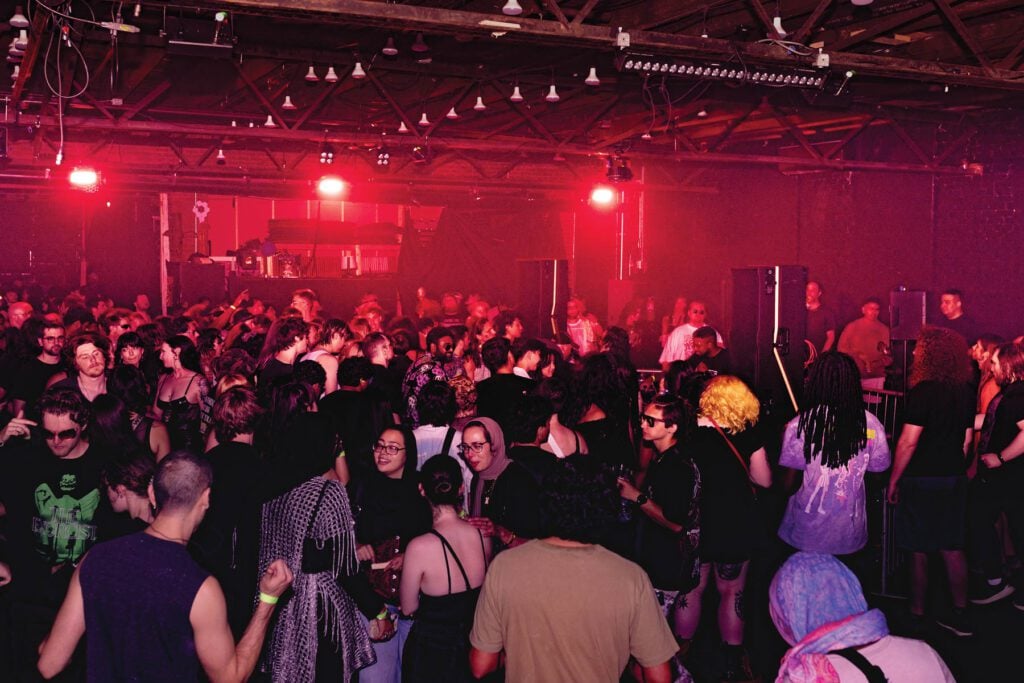
Asked to contrast the cities, Johan says, “Raleigh likes a bit more production value. Durham really likes it gritty. If the music isn’t good and the people aren’t good, Durham’s not going to show up.”
Like many electronic promoters in the Triangle, Johan moved here from a larger market with a longer nightlife culture – New York, in his case. His sound system can pump out 40,000 watts and get down to 20 hertz, “where you’re just feeling it in your eyeballs.”
Yet he also says he doesn’t like bright lights and loud noises. So the idea is not to blow you away, but “to create a safe space for people to enjoy and experience techno,” Johan says. “We want our events to be as educational as they are fun, because you’re not going to get the ‘why’ behind techno until you hear it through a system that can replicate all the information.” Soft, ambient lighting design gently reinforces the focus on the music.
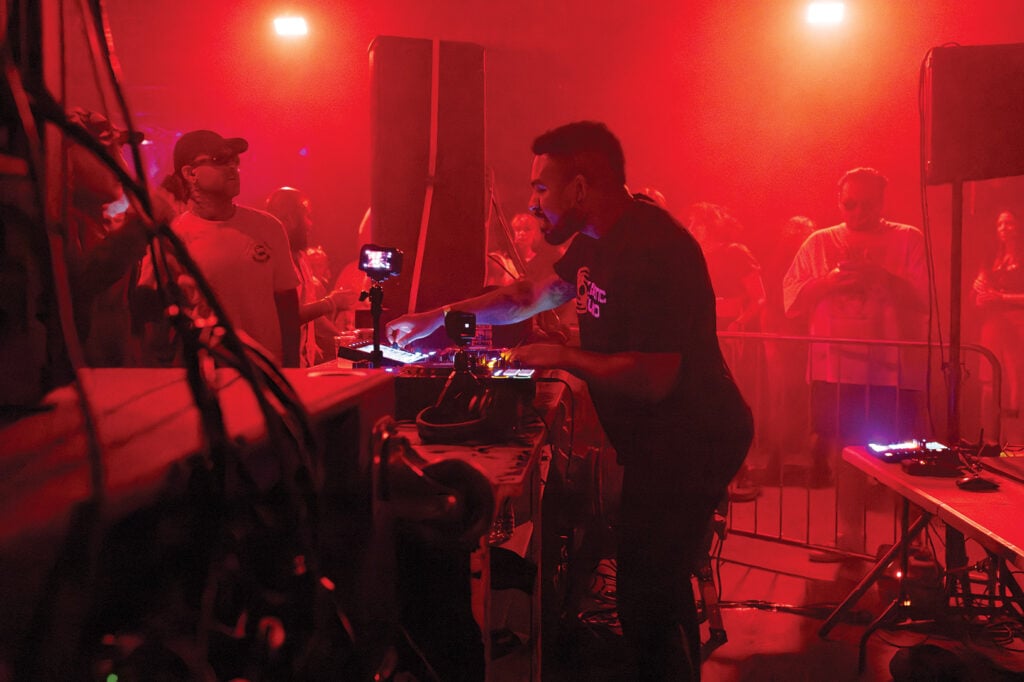
Places like BOOM Club, Tunes Recording Studio and The Fruit reveal a scene built less around gatekeepers than guides. Instruments are shared; seasoned artists pave the way for newcomers. Johan points to organizers like Treee City, of Party Illegal at The Pinhook fame, whose open-deck series Blends with Friends helps young DJs find their footing.
“It’s not enough that you’re just DJing and playing music,” Johan says. “If you don’t have respect for the culture and the community, then you’re doing more harm than good.” That sense of stewardship may be Durham’s greatest musical asset – raising the next wave of artists, ensuring they have somewhere to belong.