Rebecca Feinglos teams up with Duke Health to reimagine grief care with a new program supporting patients, families and providers facing life’s hardest moments
By Sarah Calvert | Photography by John Michael Simpson
Susan Feinglos and Mark Feinglos met at McGill University in Montreal before moving to Durham in 1972. The pair never left, making Durham their lifelong home where they raised their two children, Daniel Feinglos and Rebecca Feinglos, in a community they came to love deeply.
Those who knew her well describe Susan as a wonderful human being – caring, compassionate, snarky, irreverent, warm and razor-sharp – while Mark was a man of service known for his humor, intellect and fervent fandom of Duke University athletics. Both built remarkable careers: Mark completed his residency and fellowship at Duke before leading the health care center’s endocrinology division for a decade; Susan served as director of the Duke Medical Center Library when the internet was still a novelty, even writing a textbook on online search procedures.
Their thriving professional and personal lives took a turn in 1994 when the family was hit with the devastating news that Susan had glioblastoma, an aggressive form of brain cancer. Duke Drs. Henry Friedman and Allan Friedman – physicians who were also friends of the Feingloses – became her care team and supported them closely during treatment. They implemented an investigational therapy that was successful, but not curative, extending Susan’s life by eight years.
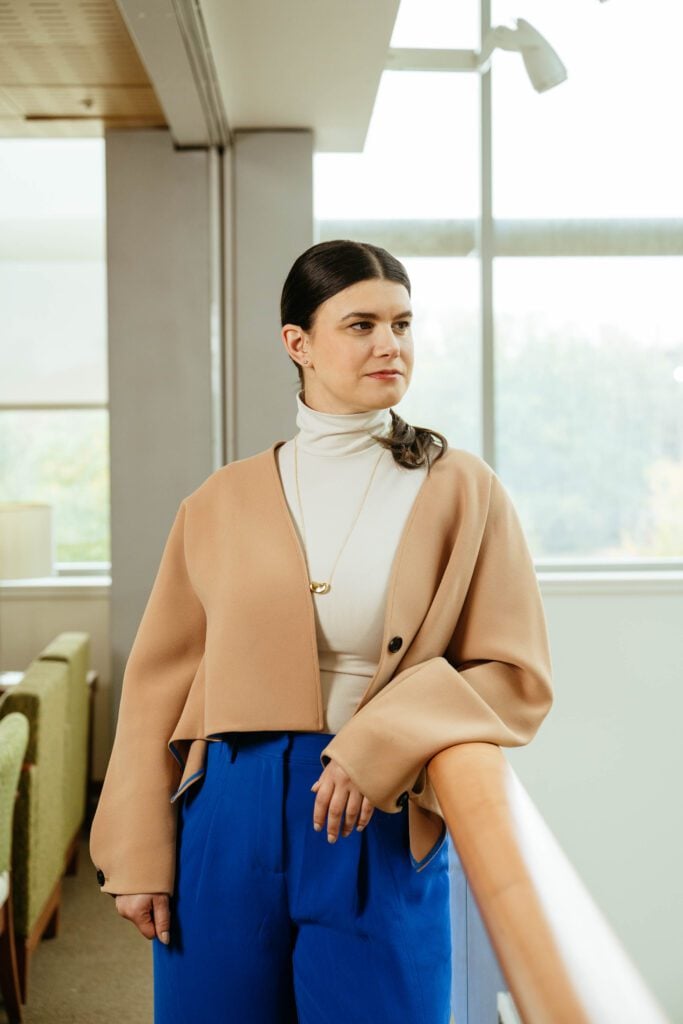
Losing her mother at age 13 was life-changing for Rebecca, but she says it was her father’s unexpected passing in 2020 that dramatically altered her trajectory. “That reset my entire way of thinking around how I wanted to spend my time,” Rebecca says. “In particular, grief came to the forefront of my mind.” That reflection led to Grieve Leave, a blog she launched in 2022 to chronicle the year she took to explore her grief. Finding that existing grief programs in the Triangle didn’t resonate, Rebecca transformed Grieve Leave into a company dedicated to building community around loss. Its “Sad Hours” – casual gatherings at local breweries, bars and cafes – invites people to talk openly about grief or whatever else they have going on in their lives in comforting, judgement-free spaces. “My goal in life at this point is to normalize that grief is everywhere, and let’s stop pretending like it’s not,” Rebecca says. “We can all live a little bit easier at home with the people we love [and] at work with our colleagues if we just acknowledge that grief is alongside us. It is not something to be ashamed of, it is not something that we need to hustle to overcome. It just is a part of our lives.”
As she considered how to extend that mission, Rebecca sought a way to both honor her parents’ legacy and influence change in grief culture, starting within the medical community that had cared for her family. The result: the Susan and Mark Feinglos Grief Initiative, backed by Rebecca’s $250,000 donation to Duke University’s Preston Robert Tisch Brain Tumor Center through her philanthropic foundation, the Feinglos Fund.
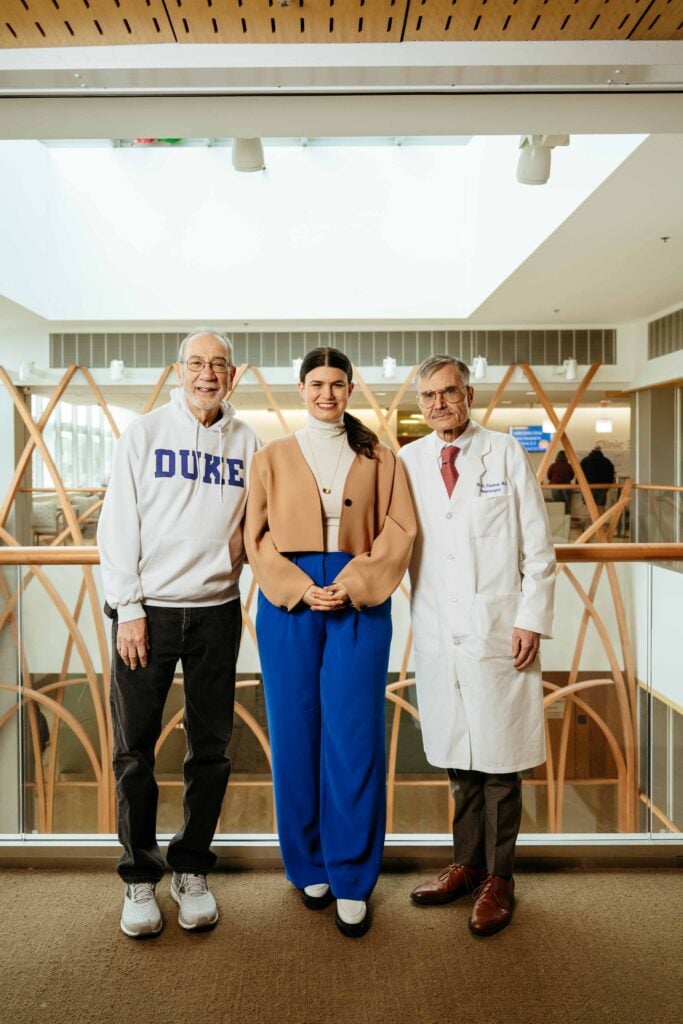
Unlike current programs that exist – such as family groups, chaplains, hospice and bereavement, as well as psychology and psychiatry assistance – the initiative intends to build support structures for patients and families in addition to health care providers, who experience their own form of grief through patient care that perseveres long after the diagnosis. This ambition was met with enthusiasm from Henry and Allan, who now serve as the co-chair and neurosurgical director, respectively, of Duke’s brain tumor center. Allan praises the concept for recognizing the need to take care of those left behind weeks, months and years after the grief event, not only in the immediate aftermath. He says its focus on long-term, sustained compassion reminds him of his mother, who would bring meals to grieving families several weeks after a loss.
Henry describes grief in cancer care, specifically, as a “palpable, visceral force,” that affects everyone involved – patients, families, friends and clinicians alike. Historically, he notes, the medical community has advised its members to suppress their emotions and move forward; “but the more you care, the more you put your heart into what you do – as the [medical team at the] Brain Tumor Center at Duke does, the more there is an impact on the health care providers,” he says.
Oncology is a speciality with one of the highest burnout rates in medicine, and Rebecca and the doctors are hopeful that this initiative will help reduce those numbers. The donation itself will also fund a pilot program to sanction backend work researching what grief support currently exists, its impacts, best practices and ideas for moving forward. Their ultimate vision is to create a scalable model that serves all of Duke’s patients and can then extend to the broader neuro-oncology community.
Since the original publication of this story in the December 2025/January 2026 issue, The Feinglos Fund has partnered with Pause – a nonprofit dedicated to supporting people of color through grief and end-of-life with safe, culturally sensitive and expert-informed resources – to research and design the pilot grief support program.
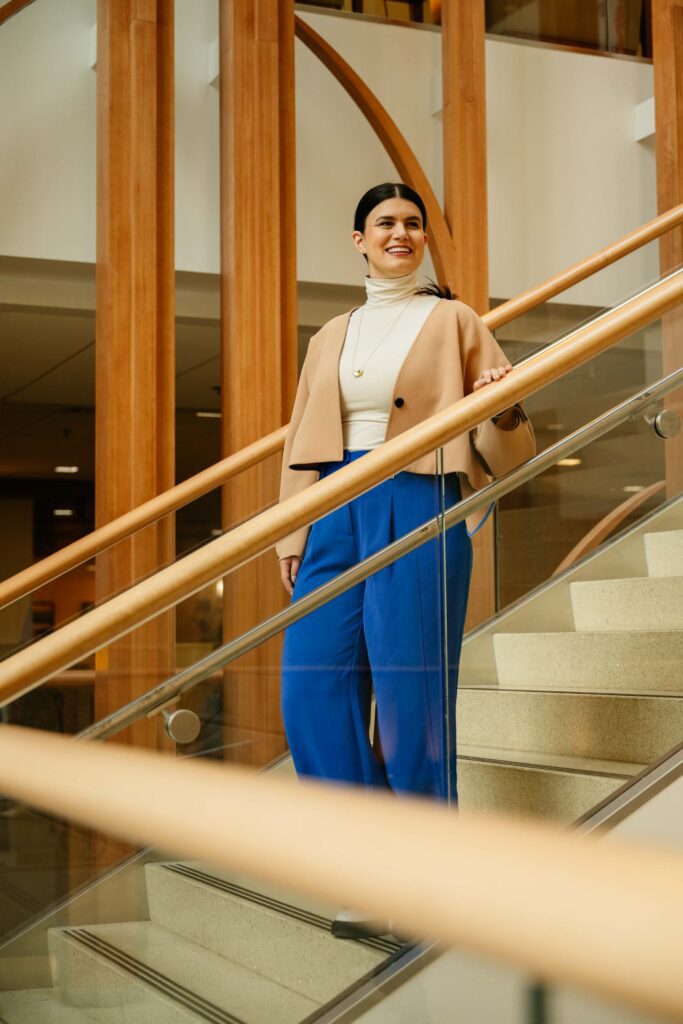
In a 1995 email to friends, Susan wrote, “I would wake up each morning, remember what happened, and then hear the birds chirp. That helped. …” That simple moment of solace – “hearing the birds chirp” amid heartbreak – echoes through Rebecca’s work today.
“Grief doesn’t have to be something you put a positive spin on for you to be handling it well,” she says. “And it also doesn’t have to be something you completely ignore to handle it well. Grief can just be. Sometimes I’m really angry; sometimes I’m really sad; [and] sometimes I’m incredibly motivated to build with that.”
“I love that we are going to try,” Rebecca says of the initiative’s next steps. “… I think that is all we can do in our grief – just keep trying. What an honor it is to help other people try.”