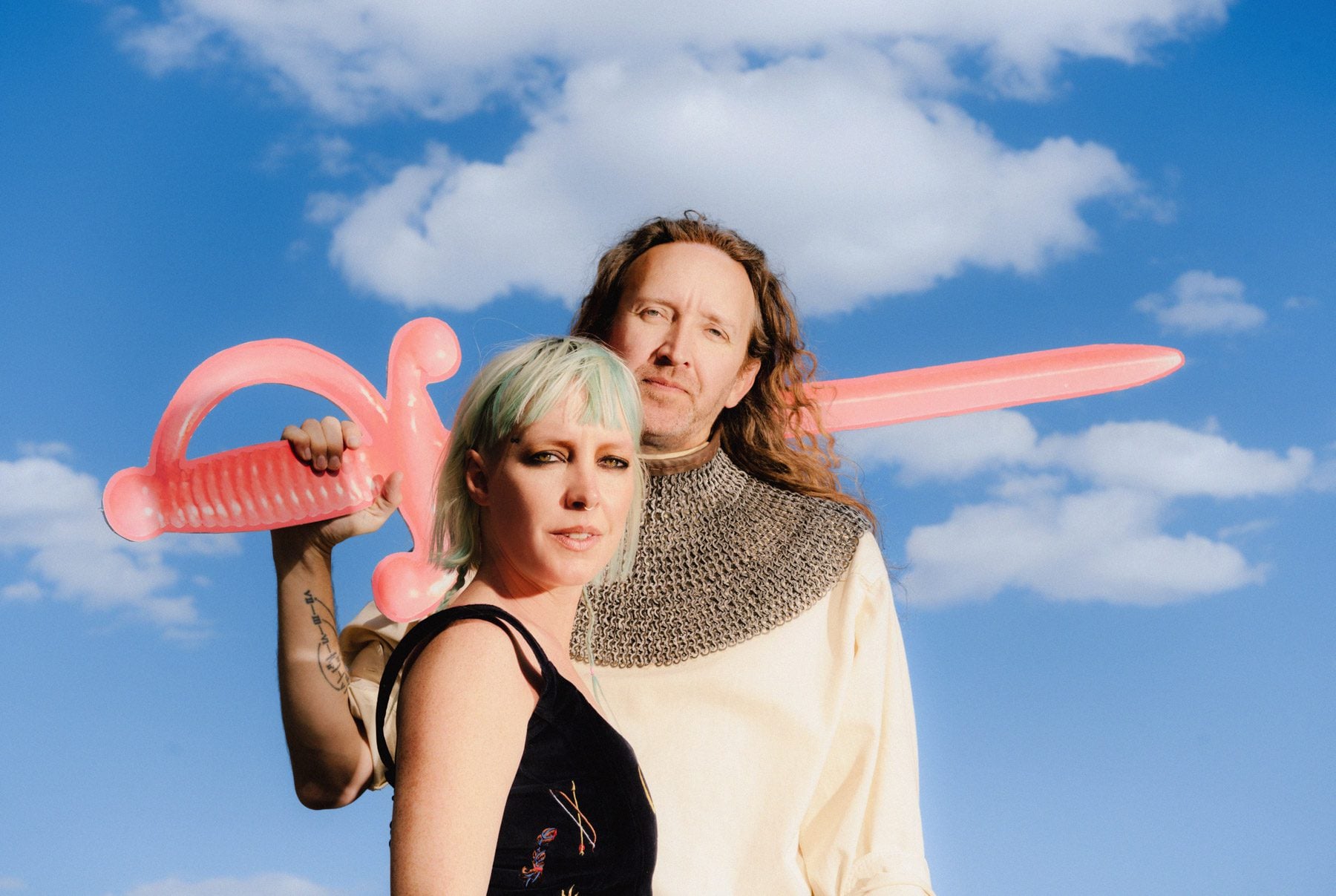
Sylvan Esso’s Amelia Meath and Nick Sanborn reflect on Durham’s artistic spirit, October’s Good Moon Festival and the cathartic, chaotic energy of their forthcoming album
as told to Renee Ambroso
Your creative partnership has grown far beyond Sylvan Esso over the past decade. You’ve launched Psychic Hotline, built Betty’s as a recording space, produced Good Moon and collaborated with a wide range of artists. How has your partnership evolved from simply making music together to creating an ecosystem that supports other musicians?*
Nick Sanborn I think it’s the healthy, natural progression of any creative relationship as it gets older. [When] it started, it was just the two of us and about what we both wanted. As the band and the community around us got bigger and [became] part of the scene in North Carolina, we felt like it was this natural response to the umbrella getting bigger. Those were all responses to necessity. We needed a recording studio, so we made one. We needed a place to put our first record that we got the rights back to and Mountain Man’s first record that we got rights back to. Looking around for labels, [we] realized, well, maybe we should just start this label. Good Moon started [by thinking about] how [do] we play a local show that anybody can come to, and that’s been this progression for a long time. We’re lucky enough to have that be a problem we have to solve.
In 2017, we did a one-day thing at Shakori Hills [Community Arts Center] and learned a lot. Then … we were working with a huge company to [produce a festival]. We had sites picked out, and then the pandemic happened, and that whole thing went away. So I [thought], “We have to go back to the drawing board,” and [we played] three nights at the [Historic Durham Athletic Park] in 2021. That felt really good. Did it at the new [Durham Bulls Athletic Park in 2024] and we learned a lot from both of those. This time we wanted to change it again [and focus on] making this feel like it’s really in the city. We wanted to activate as many spaces as we could so that everyone can walk from one place to another, but it will still be in the downtown area so that a lot more people have access to it.
Amelia Meath Yeah, all of those things – the label and the studio and the festival – feel like we were trying to respond to what was happening, to what we needed and trying to do cool stuff in the city we live in.
Many artists leave smaller cities once their careers take off, but you’ve intentionally continued investing in Durham. What made you believe this city could support not only your own careers but a broader creative community?
AM Durham has always been supporting and cultivating a broader creative community in that it has historically been a cheap and interesting place to live, so it naturally attracts artists and cool, wild, innovative people of all kinds.
NS We decided to stay for so many different reasons. One is that we like it here. Also, it’s a really wonderful place to rest when you come home from a tour. One of the first moments I felt like we could stay here was the first or second show we played at The Pinhook. We had a release party [there] for “Hey Mami” and “Play It Right,” which we put out in 2013. We had not lived in town for very long – less than a year – and we sold that show out. And we only sold it out, I think, because Ross Grady said on NPR that it sounded like it was going to be a cool show. That idea that people will take a chance on things here, that’s so empowering for an artistic community. That is one of the very specific litmus tests of whether or not a scene can emerge from a place. I remember being blown away by that and feeling like that was very unique.
Have you noticed Durham’s music community changing over the past decade? What excites you most about where it’s headed?
AM Merge [Records’] presence has meant that there has been a thriving, fascinating music community. Right now, it’s super exciting. Verity Den, Fust, Wednesday, MJ [Lenderman], Anjimile – all of these incredible people are coming out of the woodwork making incredible stuff.
NS Merge and [N.C.] Central – having those two large institutions in very different worlds has provided this constant draw, and both also produce artists. Because of that, it always feels like it’s moving. Maybe it’s more electronic one year, more bluegrassy or more jazzy, but it doesn’t feel like there’s a unified sound because of the diverse set of people and institutions that are here. It’s always moving, and that’s the most exciting part about being here. It feels like anything could come out of [this area], especially as smaller venues [continue] opening up and more bands emerge and start to ascend – like Verity Den is doing now – it energizes everything that’s happening and [reaches] new people who think, “Oh, I could do that, too.”
You’ve said that you don’t want to do anything “rote” here in your hometown – you want to keep things fresh. In what ways have you reimagined the festival this time around, and how does this format better reflect your vision?
AM We wanted to try having [the Durham Performing Arts Center] be the big show base of operations this year, and then engaging with all of the venues downtown to see how that feels. No. 1, you can walk from show to show, which I think will be lovely. I hope people bring their bicycles or their Rollerblades. No. 2, there’s a lot of delicious food available. It’ll feel like everybody will be included, even though not everyone will necessarily be able to go to every show. I want to see how this feels.
NS It’s like the scene itself – it’s always going to be changing because the people involved are going to be different. We’re always going to be trying something new, and some of those things will work, and some of them will not. We’re going to do something wrong this year, and we’re going to want to correct it in two years. There’ll be unexpected wins and losses that we don’t see coming that inspire the next generation to think. I’m excited for all the ways it’s going to work and all the ways it’s not going to work. I think that really reflects what’s happening within the music scene, this constant turning of the Rubik’s Cube.
What qualities are you looking for when deciding who belongs on a Good Moon bill and how did you ultimately make your selections for this year’s lineup? Are there artists this year that you think people absolutely shouldn’t miss?
AM I think people shouldn’t miss anything!
NS Which is, schedule-wise, impossible.
AM I would also like to say that our partner in Good Moon, Psychic Hotline and Betty’s is Martin Anderson, who was born and raised in this part of the world. His ability to get things done, his sense of A&R [and] his exploratory, wizardly knowledge of music really deeply informs everything we do, and usually makes it a lot cooler than it would be without his input.
NS Same with Rusty Sutton.
AM And Libby Webster. It’s all people who work at our management company, [The Glow], and Psychic Hotline. People who are constantly lifting us up and coming to us with great ideas, and then we [say], “Yes, do that,” and we get credit for it. So I would like to highlight those incredible people.
NS I’m excited about Leenalchi. [It will be their] first time in the States from South Korea.
AM Tyler Childers is a dear friend of ours, he’s the absolute best. The idea that 3,000 people are gonna get to see Tyler Childers in the smallest show he’s played since the pandemic is so exciting.
NS I’m really excited about the late-night shows and to do my stuff with James [Mapley-Brittle of] GRRL for our after-party.
AM Also, we’re so lucky to have Alec Lomami and No Visa in town, they’re going to be coordinating DJ sets. They’re so good. That whole crew of people is doing excellent, incredible, innovative work all the time, and people in Durham are really used to it, but they don’t understand that the caliber of music and the spirit of the party that that group of people brings is unmatched.
NS Rodrigo Amarante, I can’t believe he’s playing. I can’t believe Meshell Ndegeocello is playing. Here’s the problem – you ask us this question, and we’re going to literally sit here and list every single [artist]. We’re so hyped.
AM We could never have dreamed of a Good Moon with a bill this stacked, and that is also a deep testament to a city that keeps on working with us to figure out how to put this festival on. We’re so grateful. Everybody, keep on coming. Thank you so much to the City of Durham for supporting it. It’s gonna continue to get weirder and weirder. So let’s f—ing go.
Also, my dream is to curate and create a festival where someone who doesn’t know anyone on the bill can show up and feel like the quality of the curation means that they’re gonna see things that are going to blow their mind. Every festival lineup is a gift and an offering, saying, “Here is all of this wild music for you,” and I hope that people keep on coming back every two years ad infinitum.
What can folks expect from the after-parties?
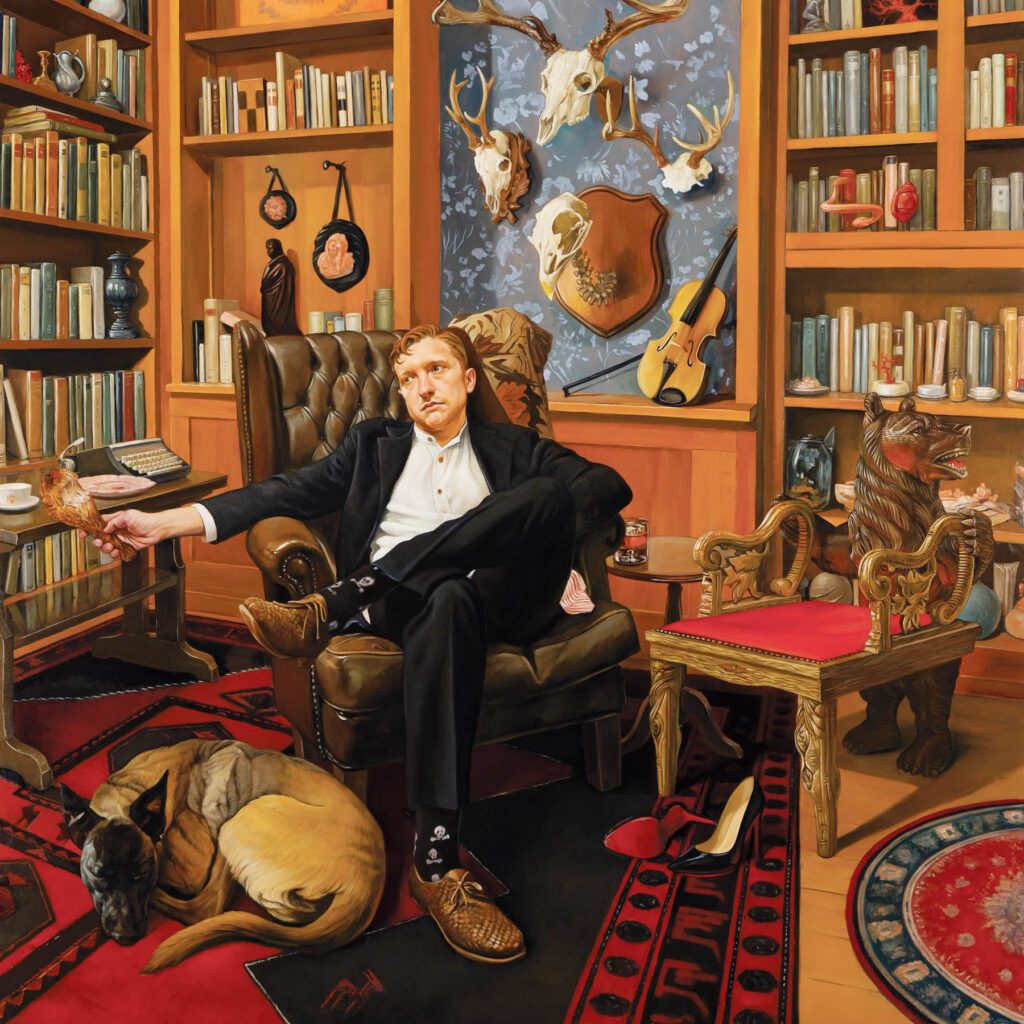
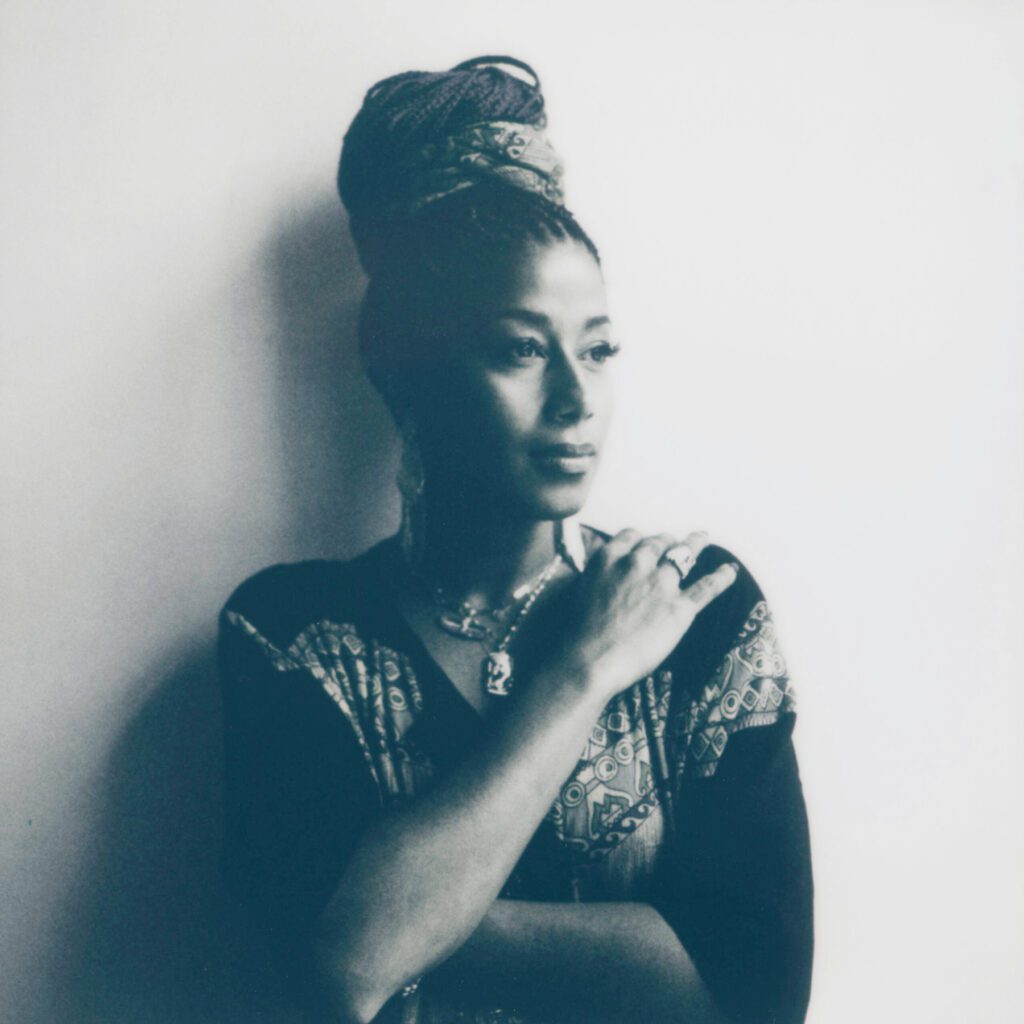
NS I’m extremely excited about Jacques Greene in particular. We are both huge fans of his. We really wanted to activate what’s now BOOM Club, formerly PS37. It’s one of those spaces that feels the way Durham felt when I moved here a billion years ago, and it feels uniquely suited to highlighting what’s special about clubs and nightlife [here]. That’s why I think Alec and No Visa had to be a part of it. Their assistance with curation, me playing a set with [GRRL’s] James, Jacques Greene being here, it all feels like that is the place to go post show to dance until very late. It’s the warehouse party that you always wanted to exist, and they do it all the time. They’re not only doing it during Good Moon, but I’m grateful. It had to be [part of] the festival in order to actually reflect what’s happening here.
You’ve said that all you’ve done – from starting a band to forming your own record label – comes from your “DIY” mindset. How do you decide where to channel your energy and effort? What kinds of projects are you excited about taking on?
AM At this moment, we keep saying “yes” to everything we think is cool, which means that we are spread pretty thin, but also, YOLO.
NS Everything that we’re doing right now feels like the accumulation of all of the decisions we have made up to this point. As we get older, that sense of curation extending into our lives and our practice is feeling more and more prescient. How will the things I say yes or no to today change what happens tomorrow, and how is that going to shape who comes into my life and who leaves my life? These are things I’m thinking about a lot, so we curate every decision very thoughtfully. I love where we’re at with the band, the studio, the label, everything, where we’re at in town, even, and I have no idea where any of that is going. If you asked me 10 years ago where it was going, I would never have said this.
You recently shared a new single, “Hot Slob,” from the forthcoming album, “Ow ∞,” set to release in September. What does the album encapsulate; what themes does it explore?
AM Every album is the summation of all of the struggles that I’ve had usually around the time I was making it. This one is about a lot of things: feeling isolated, getting older, the cycle of pain and destruction.
NS There’s nothing like starting working on a record right as [Hurricane] Helene hits, and then going to Los Angeles and having a fire hit, and feeling like those are metaphors for your entire life.
AM Yeah. We tried to begin twice, and catastrophic events canceled production, and then shaped what we made.
After more than a decade as Sylvan Esso, does releasing new music feel different than it did early on? What still keeps the process exciting?
AM Before we did this record, I was really bored, and we designed the making of this album and the way that we built our live show to be sort of a boredom buster. We didn’t want to do anything the same way that we’ve done it before, and that’s keeping us really engaged. I hope so many people listen to it.
NS I love it so much that I genuinely don’t care what people think. It was so cathartic to make that that is its own source of new energy. Weirdly, practicing with the band has re-energized my attachment to music we wrote when I was a completely different person. That’s another huge struggle – how do you get on stage and play a song that was written by a person who you have very little in common with anymore? That’s really the thing: Burning it down, finding yourself in the ashes and finding that it’s all always been there. I will never tire of that work.
*Responses have been edited for length and clarity.