The artist collective weaves history, sisterhood and self-expression into every vibrant piece – preserving culture, one stitch at a time

By Sharon Kinsella | Photography by John Michael Simpson
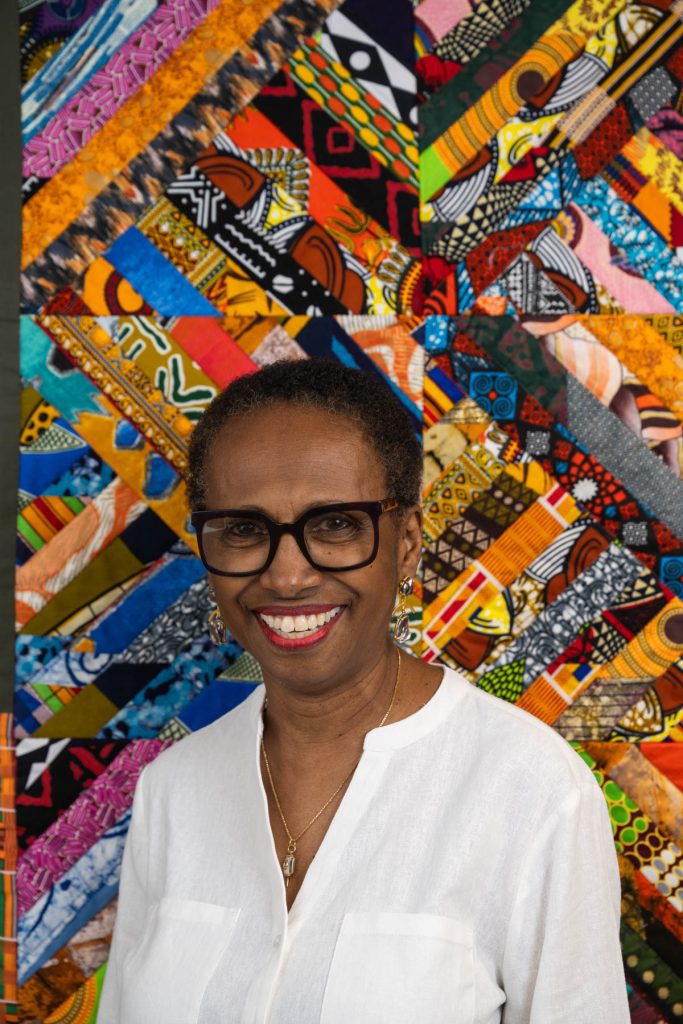
See if you can find the through line,” says Andrea Carter, unfolding an expansive blanket across the conference table in the basement of the Stanford L. Warren Branch Library. No – not just a blanket – a quilt, crafted from a dizzying array of colors, patterns and textures, each strip zigzagging in playful diagonals all the way to the fabric’s edge. She hints that one strip runs unbroken throughout, but it’s hard to find. Then, she points to the boundary of a central diamond, its outline formed by the four corners of the quilt’s inner squares. Once you see it, you can’t unsee it. Suddenly, the quilt reveals itself as a cohesive whole, its underlying logic snapping into focus – a sophisticated work of art disguised as spontaneity until the pattern emerges.
Andrea’s quilt is just one example of the bold, expressive work produced by the African American Quilt Circle’s jovial members. The group, formed in 1998, meets monthly at the Hayti Heritage Center to “show and tell” their latest quilts, exchanging ideas, techniques, fabric and camaraderie. “You have a circle of sisters who are there to give you any kind of help that you need – sewing, but personal, too,” says Linda Lewis, who has been a part of the AAQC for 12 years. “You know they’ll talk you through it, whatever it is. It’s a really good family of sisters.”
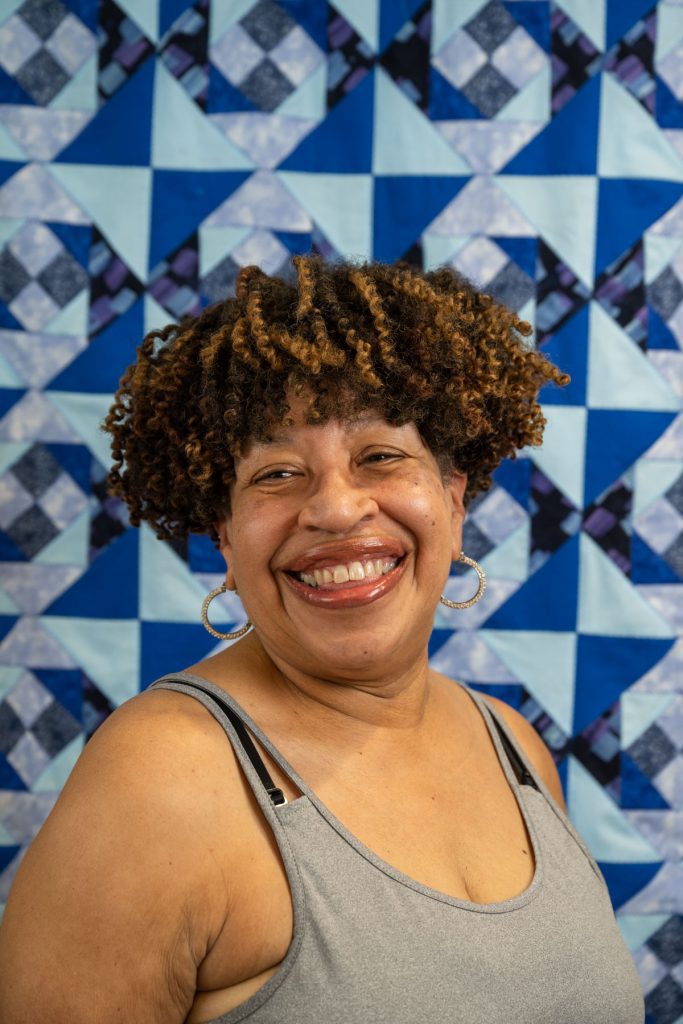
Co-founder Jereann King Johnson, who began quilting with her mother when she was around 8 years old, says her original hope and motivation for starting the group was just to have fun. “There was no right and wrong kind of quilt,” she says. “It was a way of expressing yourself, and that was what was important in quilt-making and being a part of this community.” She says the name of the club is no accident. The original members floated different options before eventually settling on “circle” for its democratic symbolism. “Everybody is the same distance from the center of the circle … there was no hierarchy.”
Today, the AAQC continues to embrace a spirit of fun and self-expression, but as membership grew and its goals evolved, the cohort adopted a more defined mission and structure – ultimately incorporating as a nonprofit. This transition enabled the circle to expand its impact beyond its own circumference, regularly donating quilts to local organizations and vulnerable populations. They also serve an important role as cultural stewards, preserving and celebrating quilting traditions within the African American community.
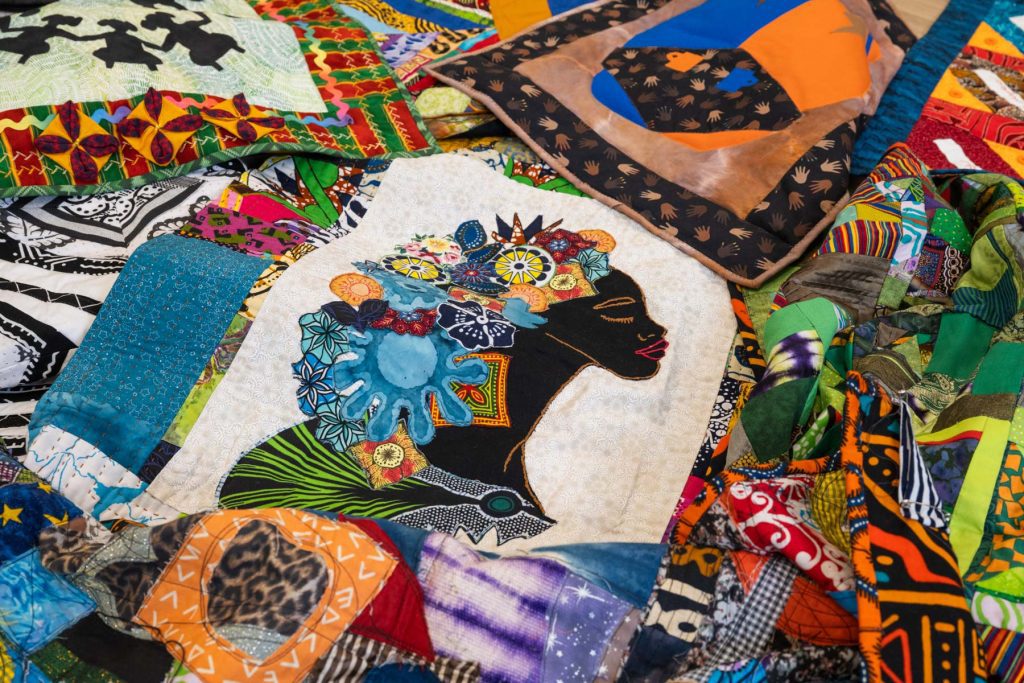
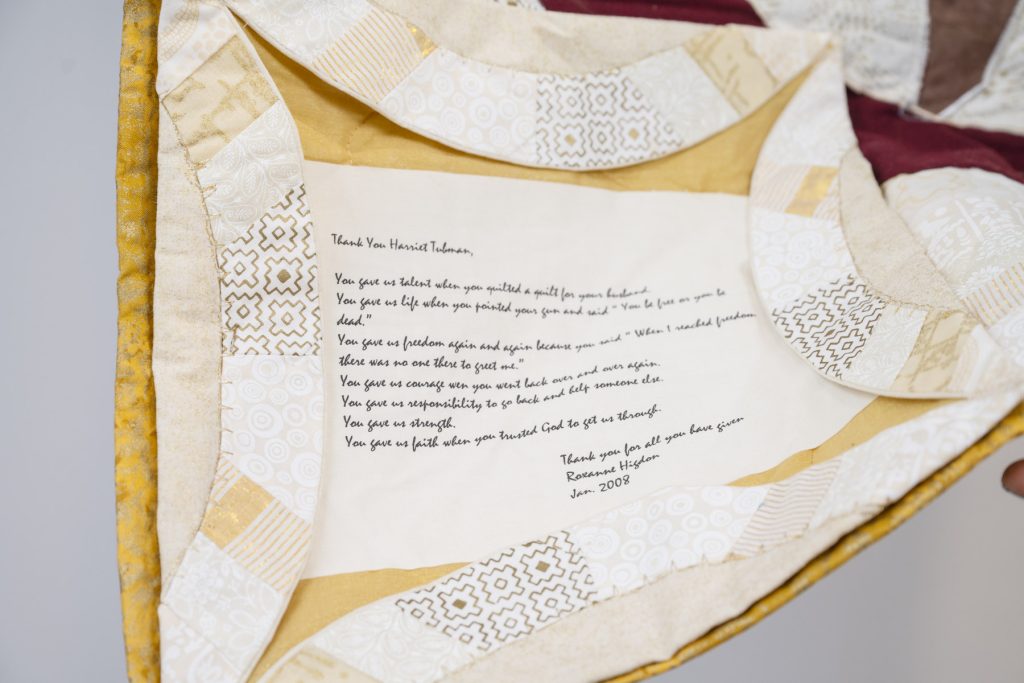
Quilting was once purely practical – scraps and remnants stitched together by hand to provide warmth out of necessity. Today, quilters draw from a vast array of styles, techniques, fabrics and even technology, turning tradition into a vibrant spectrum of creative expression. Many use their works to tell stories of family, history, spirituality and social justice, translating powerful narratives through fiber and textiles. Linda, for example, shares a sampler quilt – each block uniquely designed – depicting scenes and symbols from the Underground Railroad. “That quilt meant a lot to me to make,” she says. “Creating it was a way to connect with my historical awareness. That was very moving.”
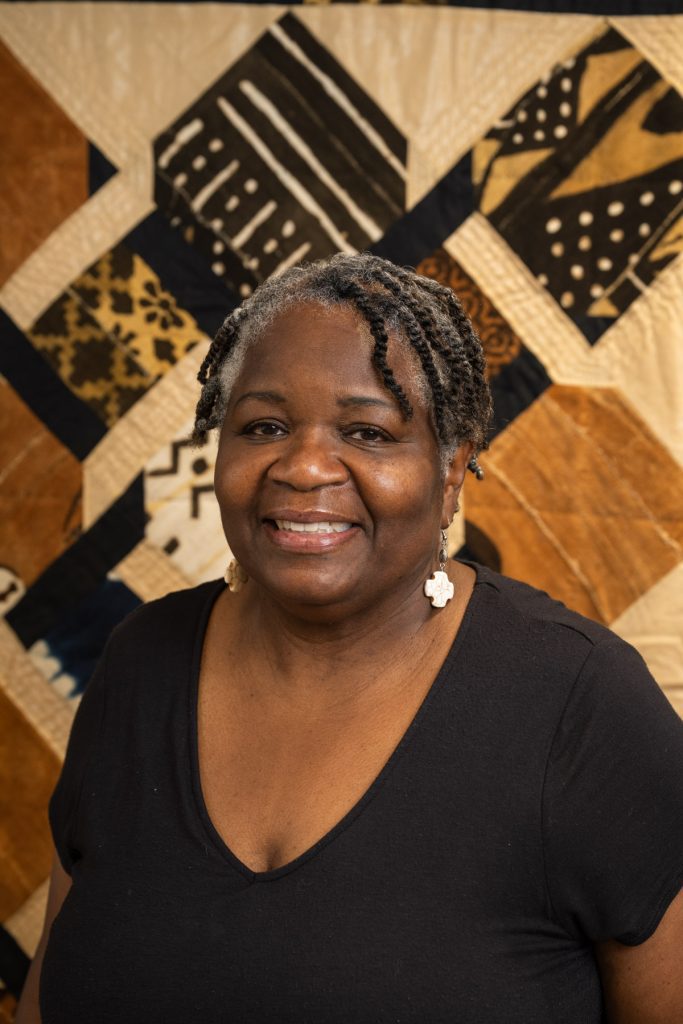
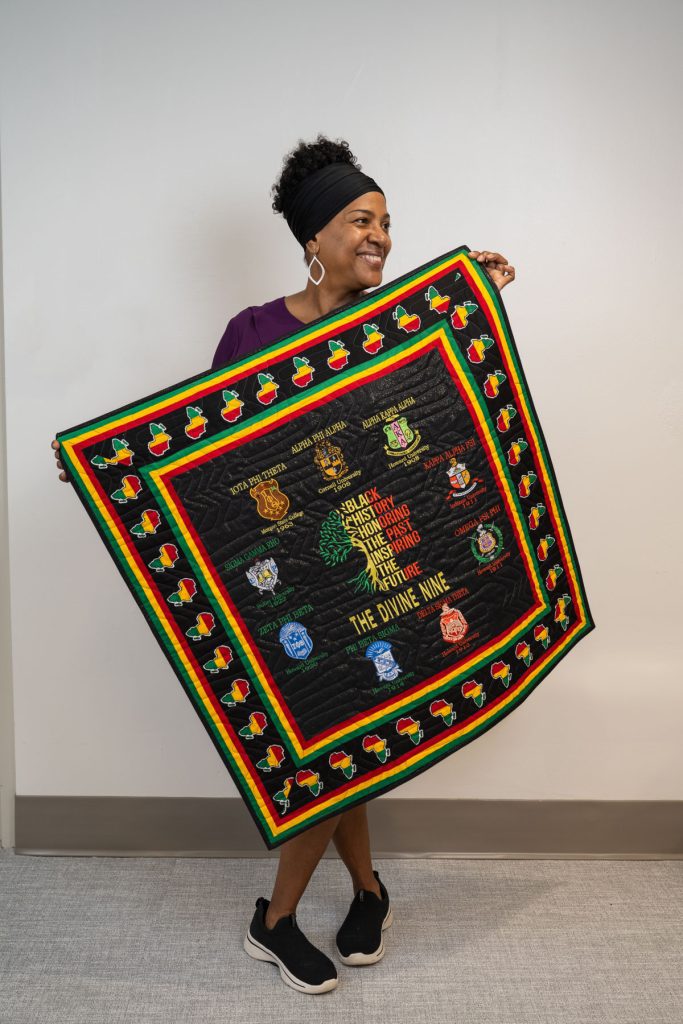
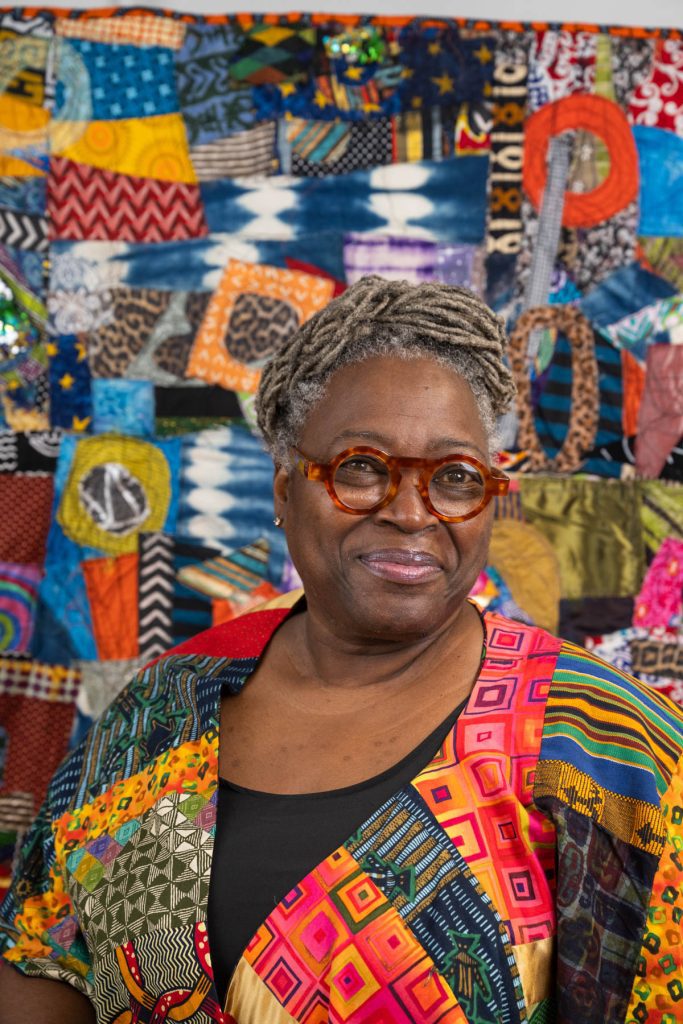
The AAQC has earned recognition through exhibitions, public art installations and media coverage – both nationally and internationally. “When people see [the quilts], there’s always a sense of awe,” Jere says. Linda adds that people in the community know her by her work. “When you go out, people recognize you,” she says. “[They say], ‘Oh, I saw your quilt here. You’re from Hayti, I’ve seen you.’ Even if they don’t recognize you personally, they recognize your work. It makes you feel very proud.” For many members, the group’s greatest draw is its welcoming community. “I used to be a closet quilter,” shares Julendia Gaillard, one of the newer attendees. “I learned to quilt from YouTube. I quilted alone, and my daughters – who are all grown and gone – were like, ‘You need to get out of the house.’”
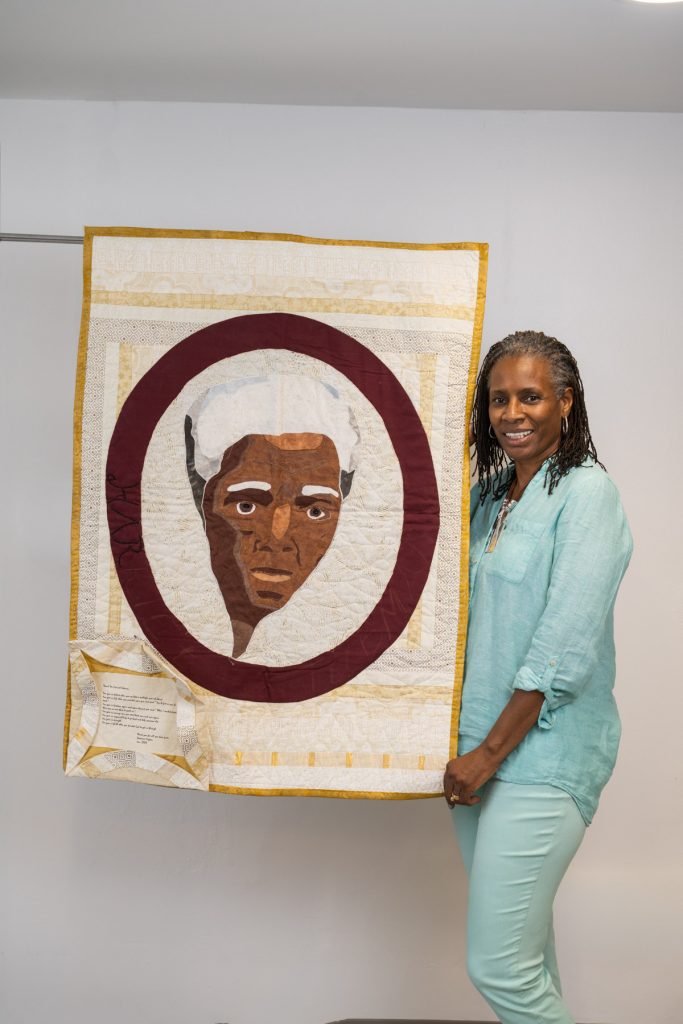
The organization now boasts around 60 quilters from across North Carolina and beyond, with some joining from out of state and even internationally. Meetings over Zoom – launched in the wake of the pandemic – make the circle even more accessible, welcoming a wider range of voices and experiences. The AAQC artists continue to push the boundaries of what quilting can be as the collective looks to the future, recently interpreting themes of Afrofuturism at the Kindred Spirits Quilting Conference held at the Durham Convention Center in June 2025. “I am really proud of the way the quilters have taken that little kernel of an idea and nurtured it, welcoming new members and growing it into something so impactful,” Jere says. “It’s humbling and wonderful to see how far we’ve come, and to imagine what’s still ahead.”