These Durham vintage stores stock curated racks of retro threads, nostalgic collectibles and one-of-a-kind treasures for every personal style
By Caleb LeJeune | Photography by John Michael Simpson
Personal style comes with a story. For thrifters who relish the thrill of the hunt, the Bull City’s secondhand shops offer myriad opportunities to uncover something unexpected – a piece that feels distinctly yours and that you can carry forward into its next chapter. These carefully curated bastions of sustainable fashion invite shoppers to dig a little deeper for nostalgic treasures and one-of-a-kind pieces, each with a history of its own – and plenty of potential for a new one.
PAST MEETS PRESENT
Individuality is part of Durham’s DNA, and the city’s fashion scene wears it well. Consumers now crave quality, authenticity and unique pieces with a past, and the city’s vintage markets deliver that in spades.
When Dollyʼs Vintage opened in 2016, however, the landscape looked a little different. It was one of a handful of retail shops downtown at the time, and perhaps the only one delving into vintage wares. But, a decade later, owner and curator Larisa Harrison believes Durham has now developed a reputation as a destination for secondhand shoppers. “I truly love seeing the growth, appreciation and acceptance of vintage fashion as well as the positive impact it has on our environment, both local and global,” she says.
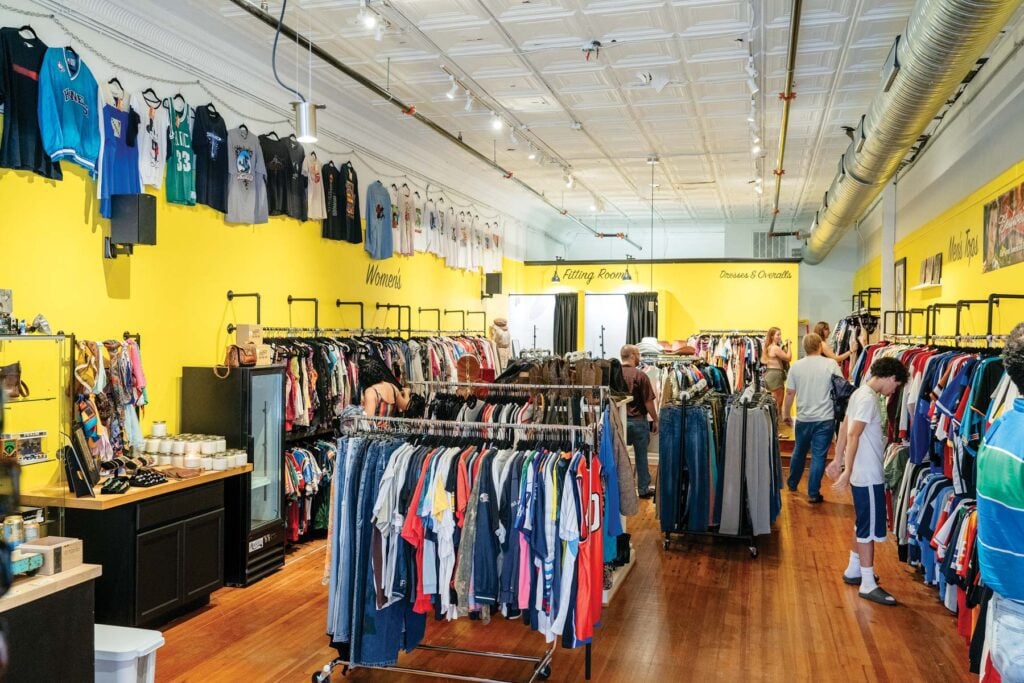
Julian Jacobs recently added a second location of The Burrow to his vintage empire, opening a 1,400-square-foot storefront on Parrish Street in August just steps from Major the Bull. The shop feels like stepping into an upscale kid’s bedroom circa 1996, complete with a “Space Jam” movie poster, a bountiful collection of VHS tapes and no shortage of quirky collectibles.
THE PRICE IS RIGHT
The Burrow’s Raleigh shop features a mix of talented and tasteful vendors selling everything from old-school NC State gear to CDs, books and jewelry. Its new Durham outpost yields a similar inventory but keeps one priority front and center: affordability.
Shop carefully selected pieces that span the decades, from refurbished ’50s staples to Y2K-era nostalgia, with most items priced between $25 and $45. Build quality fits on a budget at Aldoʼs Thrift Shoppe, Julian’s second downtown store on West Corporation Street, where every piece costs $20 or less.
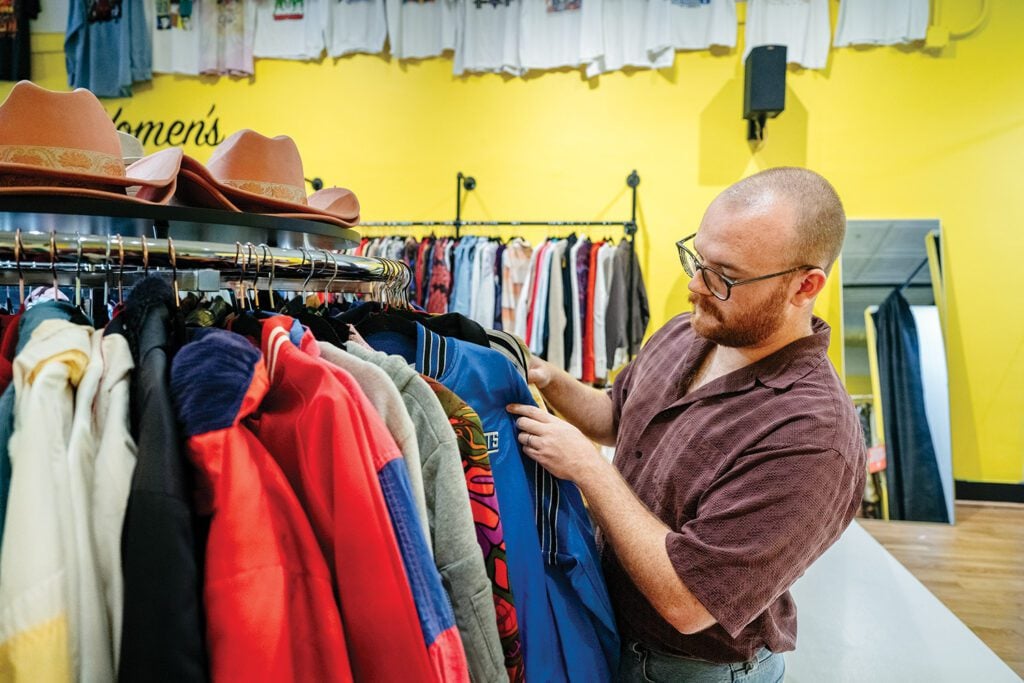
Julian notes that focusing on inventory is just as important as curating a welcoming and recognizable atmosphere when establishing a secondhand store – especially in Durham. “With everyone shopping online or just going to the mall, we’ve kind of lost the experience of going into a shop, feeling like you [went out and] did something cool and that you got your money’s worth,” he says.
IT’S A MOOD
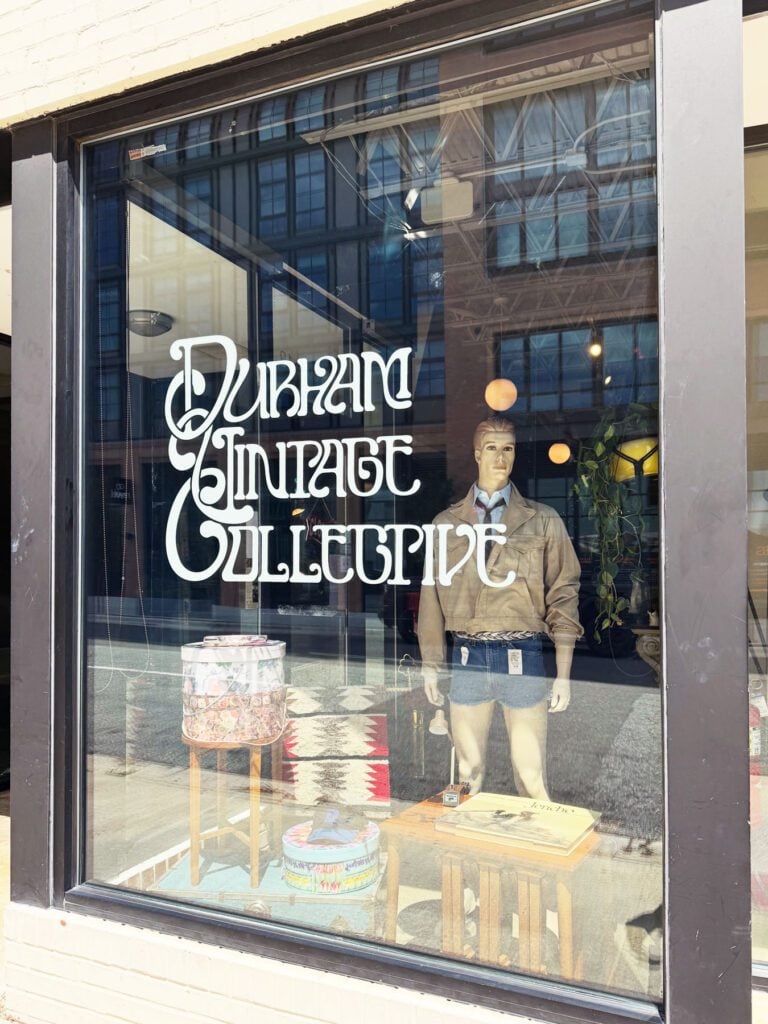
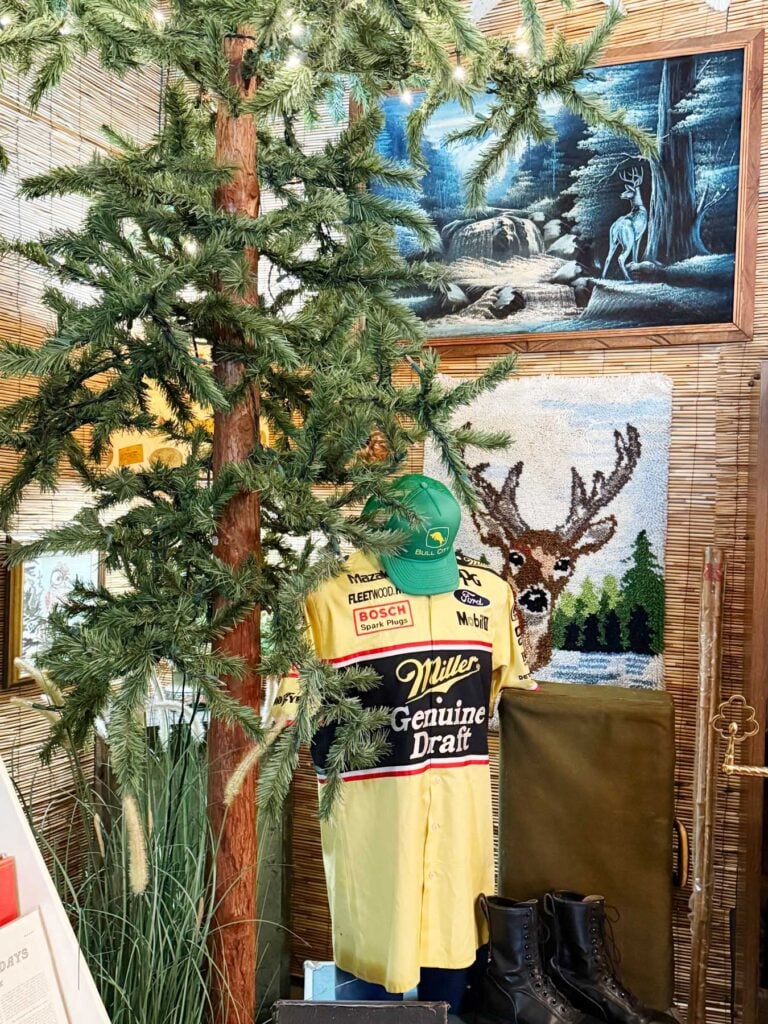
That distinctiveness comes down to personality, according to Alison Matney, owner and curator of Durham Vintage Collective. The Durham native recently relocated her store from Parrish Street to Morris Street, settling into a moodier, more nostalgic space that feels equal parts curio shop and covetable walk-in closet. “Even though we might have similar items, everybody has a different store,” Alison says. “Dolly’s, Gibson Girl [Vintage] and Flying Apple [Vintage] all have a different vibe.”
Cross the threshold at DVC, and you’ll come face-to-face with an eclectic collection of photography and paintings, retro toys and magazines, even taxidermy and other oddities. Head to the back and lose your sense of time while browsing a wonderland of thoughtfully curated clothing, vinyl records and mid-century home decor. Alison sees the shop’s broad appeal in its ability to surprise just about anyone – “from the 18-year-old Goth kid to an 85-year-old man.”
Larisa says her clients seem to be “more fashion-savvy these days, and are aware of the latest trends as well as being noticeably aware of their own personal, individual style, independent of popular opinion.” She has found that her younger customers, in particular, “are more confident in themselves and are becoming more comfortable with straying from the ‘norm’ and from what others might consider cool or popular.”
Community Threads
Durham’s vintage scene is bursting at the seams and doesn’t end within downtown
AndAlso on South Driver Street in East Durham, another of the city’s newest secondhand havens, offers a highly collectible selection of designer and unisex treasures spanning the 1800s to today, plus a handful of pieces from local artists and makers. Stop in during store hours (Friday and Saturday, noon-6 p.m.; Sunday, noon-5 p.m.; and Monday, noon-6 p.m.), or make an appointment Tuesday through Thursday for a more exclusive shopping experience.
West Chapel Hill Street’s Flying Apple Vintage specializes in “unique and everyday vintage” pieces, from ’60s knit crop tops to ’90s boho rompers alongside a curated selection of books and vinyl records from another Durham fave, The Fuzzy Needle. Want first dibs? Book a private appointment through Flying Apple’s website for access to its newest arrivals before they hit the racks or online shop.
Just a few doors down – and conveniently close enough to grab brunch to-go from Isaacʼs Bagels – Gibson Girl Vintage stocks a retro-minded mix of clothing, furniture and homewares. Explore everything from one-of-a-kind handmade pieces and 1940s satin wedding gowns to midcentury lounge sets and stereophonic hi-fi console record players.
WEAR IT WELL
Affordability certainly helps draw shoppers into secondhand stores, but quality keeps them coming back. For most folks, the appeal lies in finding well-made clothing with enough character to feel personal – and enough staying power to wear for years.
Larisa finds lasting inspiration in actress Katharine Hepburn, whose famously androgynous style combined menswear- inspired tailoring, effortless comfort and structured lines. “Timeless fashion, in my opinion, tends to lean more toward classic styles, with high-quality fabrics and simple, elegant lines as opposed to many of the elements of today’s fast fashion,” she says.
And if you want to get ahead of the next big trend, Larisa suggests looking backward. About 20 years, give or take. “Vintage denim, T-shirts and slip dresses have been very popular recently,” Larisa says. “When I was in high school in the 1980s, fashion and styles from the 1960s and early ’70s were the trend … and now in 2026, shoppers are gravitating more toward fashion styles from the 1990s/2000s, including platform shoes and boots, grunge, baby tees, etc.,” she says.
Still, some pieces resonate with shoppers well outside of modern style. Larisa remembers one customer from Japan who discovered a 1930s liquid satin, bias-cut wedding gown while casually browsing before catching her flight back home. She bought it on the spot.
At DVC, Alison takes a judicious approach to what she puts on the floor: “If it’s not 100% cotton or if I can’t pronounce it, I don’t want it in the shop,” Alison jokes. “But there’s a few labels that will always be bangers: L.L. Bean, Eddie Bauer, Carhartt, Levi’s.”
Alison also prioritizes inclusive sizing and gender-neutral options throughout the shop. She especially loves dressing the storefront mannequin in unisex outfits. The goal is to give shoppers – particularly those who may not always see themselves represented in fashion – a chance to imagine new possibilities. She hopes that those customers will see the mannequin and think, “Oh, you know what? I can wear that. I can dress like that,” she says.
Julian takes a community-minded strategy to sourcing, too. He buys locally, sourcing The Burrow’s inventory through places like the Raleigh Flea Market and the NC Vintage Bazaar, keeping money and merchandise circulating among the region’s vintage buyers and sellers.
Opening The Burrow’s Durham location also revealed a void Julian hadn’t fully recognized: Several clients have told him they had long struggled to find the right secondhand fit for men’s attire in the Triangle and are especially thrilled about the shop’s arrival in the Bull City. “I see it as more of a unisex shop, but I didn’t know that there was such a gap in Durham for men’s clothing,” he says.
IN GOOD COMPANY
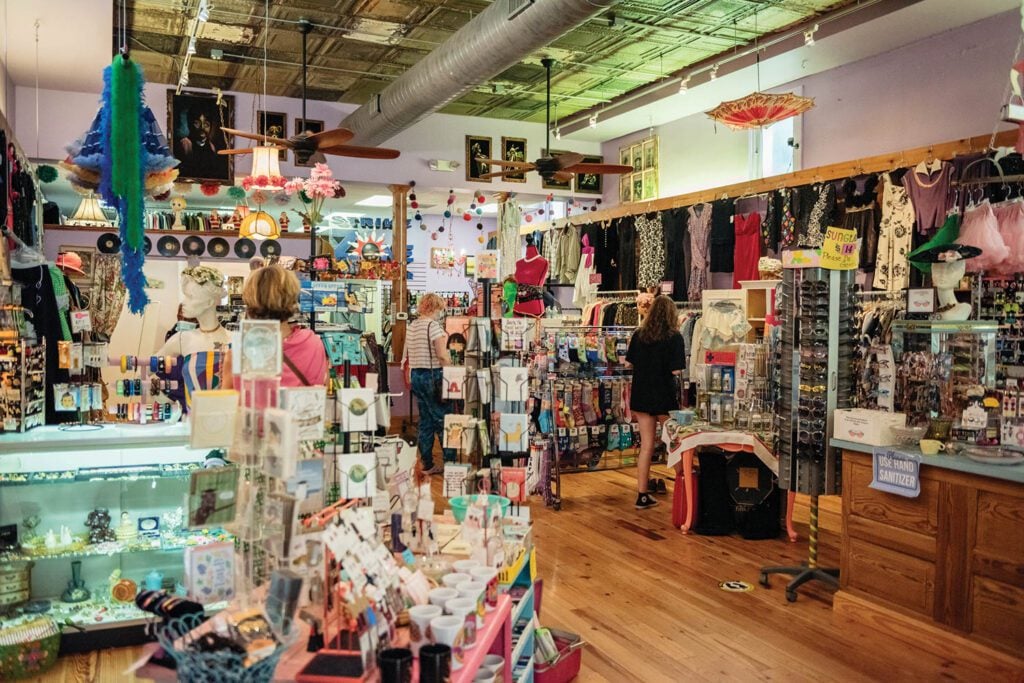
The best way to understand what shoppers want, Alison says, is simple: Listen to them. “Customer service is my number one thing,” she says. “I want honest feedback, because I’m here to take care of my clients and provide them with things that they want – not just me.”
That ongoing conversation helps shape what she brings into the store – and keeps the experience personal in an era when much of fashion browsing happens with a scroll and a click.
Julian sees the same appetite for tangible, analog experiences at The Burrow.
“I think people love the variety, the prices – the small items we have, like the CDs and the records and the shades,” Julian says. “I think Durham is just really ready for something different, something that stands out; I’m happy I can bring that here.”
For a city with a long-standing independent spirit, perhaps that’s the real draw of vintage: You never quite know what you’ll find, but you can be pretty sure nobody else will be wearing the exact same thing.
The Thrill of the Find
Hey, even vintage shop owners still get a kick out finding something rare. We asked them to share one discovery they’ll never forget:
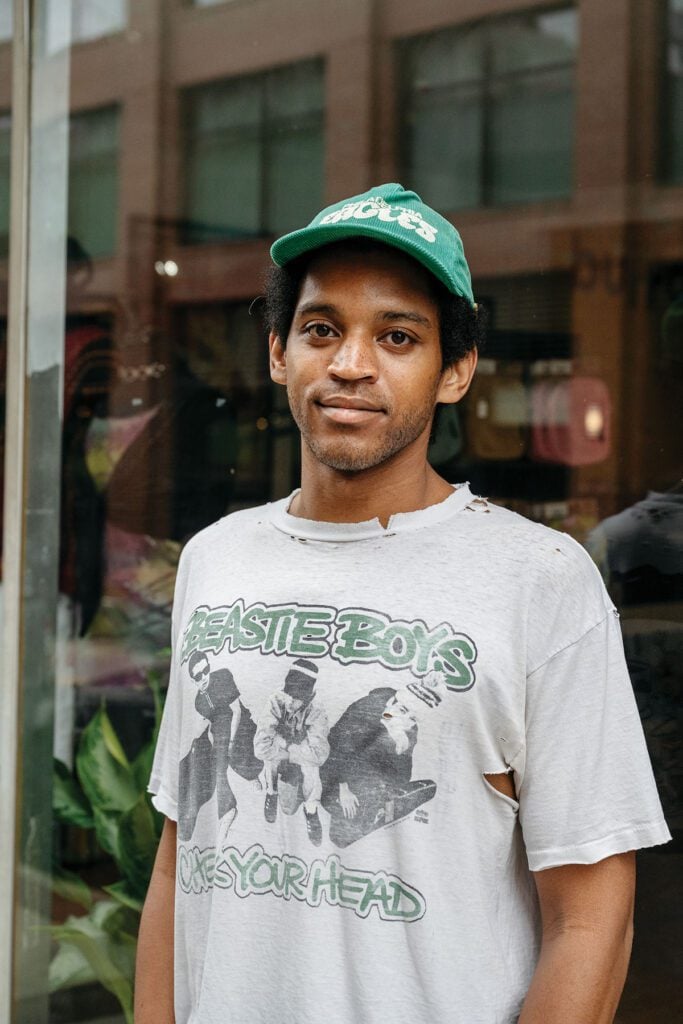
“The Beastie Boys tee that I was wearing at [The Burrow’s] grand opening is from the early ’90s. I found it in some bags that were given to me by a friend. He found them in a barn, and it was buried underneath a bunch of polo shirts with rat holes in them.” – Julian Jacobs
“A gorgeous black Victorian coat/cloak with velvet and lace detailing. I got it from Kim [Shuffler] with Everything but Grannies Panties. My second favorite would be a 1970s Sex Pistols T-shirt – ‘God Save the Queen.’” – Alison Matney
“My absolute favorite vintage piece I’ve ever found in the wild has to be an olive green, cropped, military-inspired, super-soft suede jacket with brass buttons. I found it in a vintage shop in Reykjavik, Iceland, on the day I was leaving to fly back home!” – Larisa Harrison